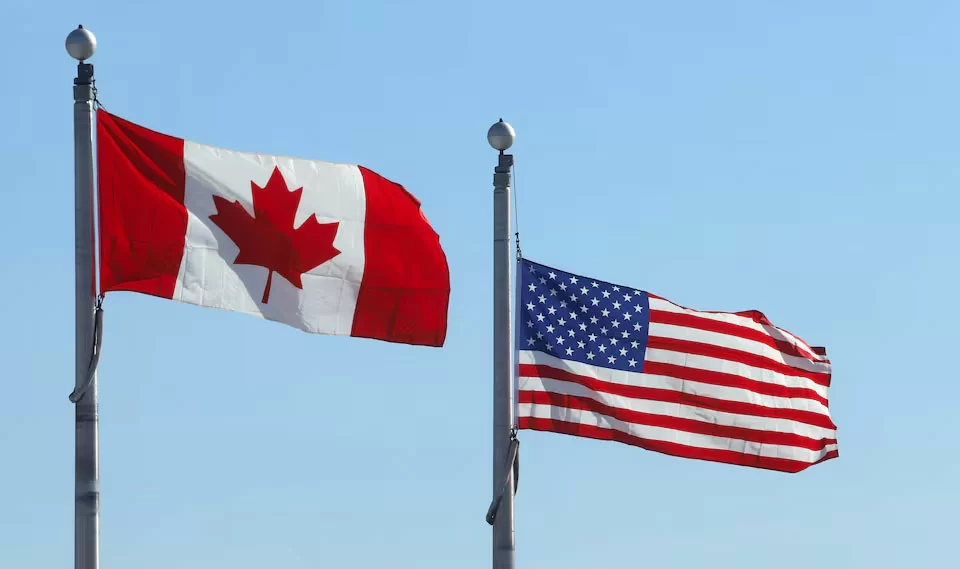
U.S. President Donald Trump has issued a stark warning to Canada, threatening to impose 100% tariffs on all Canadian goods entering the United States if Prime Minister Mark Carney proceeds with a trade agreement with China. In a post on Truth Social, Trump asserted that such a deal would enable China to “completely swallow Canada,” devastating its businesses, social fabric, and way of life.
The warning comes amid heightened tensions between the two North American neighbors, exacerbated by Carney’s recent criticism of Trump’s Greenland policy and his calls for “middle powers” to collaborate against U.S. hegemony. While Carney avoided directly addressing Trump’s tariff threat in a recent video statement, he emphasized Canada’s focus on domestic economic resilience, noting, “We cannot control what other countries do, but we can be our own best customer.”
Carney’s visit to China this month resulted in a trade agreement aimed at improving strained bilateral relations. China is Canada’s second-largest trading partner after the U.S. Initially, Trump appeared supportive of the outreach, stating on January 16 that securing a deal with China was advisable. However, his stance has since hardened significantly.
Canadian Trade Minister Dominic LeBlanc clarified that the agreement with China does not constitute a free trade deal but addresses key tariff issues. The Chinese Embassy in Canada expressed readiness to implement the consensus reached between the two countries.
Trump also suggested that China might use Canada to circumvent U.S. tariffs, warning that Canada must not become a “dumping ground” for Chinese goods. The potential imposition of 100% tariffs would severely impact Canadian industries such as metal production, automotive manufacturing, and machinery.
The relationship between Trump and Carney, initially cordial, has deteriorated notably. At the World Economic Forum in Davos, Carney received a standing ovation for his remarks on middle-power cooperation, while Trump retorted that Canada “exists because of the United States”—a claim Carney dismissed by asserting that Canada thrives because of its people.
In retaliation, Trump rescinded Canada’s invitation to his Peace Board, an initiative focused on international conflict resolution and the future of Gaza. Additionally, Trump has dismissed the USMCA trade agreement—scheduled for review in July—as “irrelevant.”
Historically, Trump has frequently deployed tariff threats during his presidency, though he has occasionally withdrawn or moderated them following negotiations. Most recently, he eased threats of stricter tariffs on European allies after NATO leaders committed to enhancing Arctic security.
The Canadian Chamber of Commerce has urged both governments to seek mutual understanding to alleviate the uncertainty plaguing businesses amid ongoing trade conflicts.