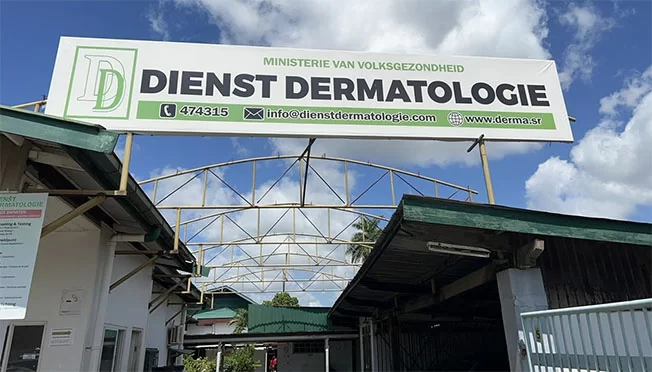
Despite being fully curable, leprosy continues to affect communities in Suriname, with new cases emerging annually—often diagnosed at advanced stages due to persistent stigma and public unawareness. World Leprosy Day, observed on the last Sunday of January, serves as a critical platform to raise awareness, dismantle misconceptions, and promote solidarity with those affected.
Leprosy, caused by the bacterium Mycobacterium leprae, is a chronic infectious disease transmitted through prolonged close contact. It manifests as numb skin patches, nodules, and nerve damage, particularly in the extremities. Without early intervention, it can lead to permanent physical impairments.
In Suriname, an average of 10 to 20 new cases are reported each year, with 12 confirmed in 2025. The Dermatology Service emphasizes that early detection and treatment can prevent disabilities in nearly all instances and confirms that the disease is entirely curable.
In a significant step toward eradication, the Dermatology Service, in collaboration with Belgium’s Institute of Tropical Medicine, is launching a nationwide research initiative in 2026. This project will evaluate the effectiveness of single or double-dose preventive medication for close contacts of leprosy patients. The study will extend across all districts and continue through the end of 2027.
The World Health Organization’s (WHO) theme for 2026, “Leprosy is curable, the real challenge is stigma,” highlights the profound social and psychological repercussions faced by patients, often stemming from misinformation. The WHO urges global efforts to increase education, encourage open dialogue, and actively combat discrimination.
Critical facts dispel common fears: the leprosy bacterium is one of the least contagious pathogens, requiring prolonged, intensive exposure for transmission. Patients become non-infectious after their first treatment, making fear and exclusion unwarranted.
The Dermatology Service urges the public to seek information and timely medical evaluation for any suspicious skin patches or numb nodules, especially on the ears and nose. Through collective action, Suriname aims to build a future free from leprosy, fear, and stigma.
For expert care and guidance, the Dermatology Service is located at Tourtonnelaan #5, with registration hours from Monday to Friday, 8:00–11:00 AM.