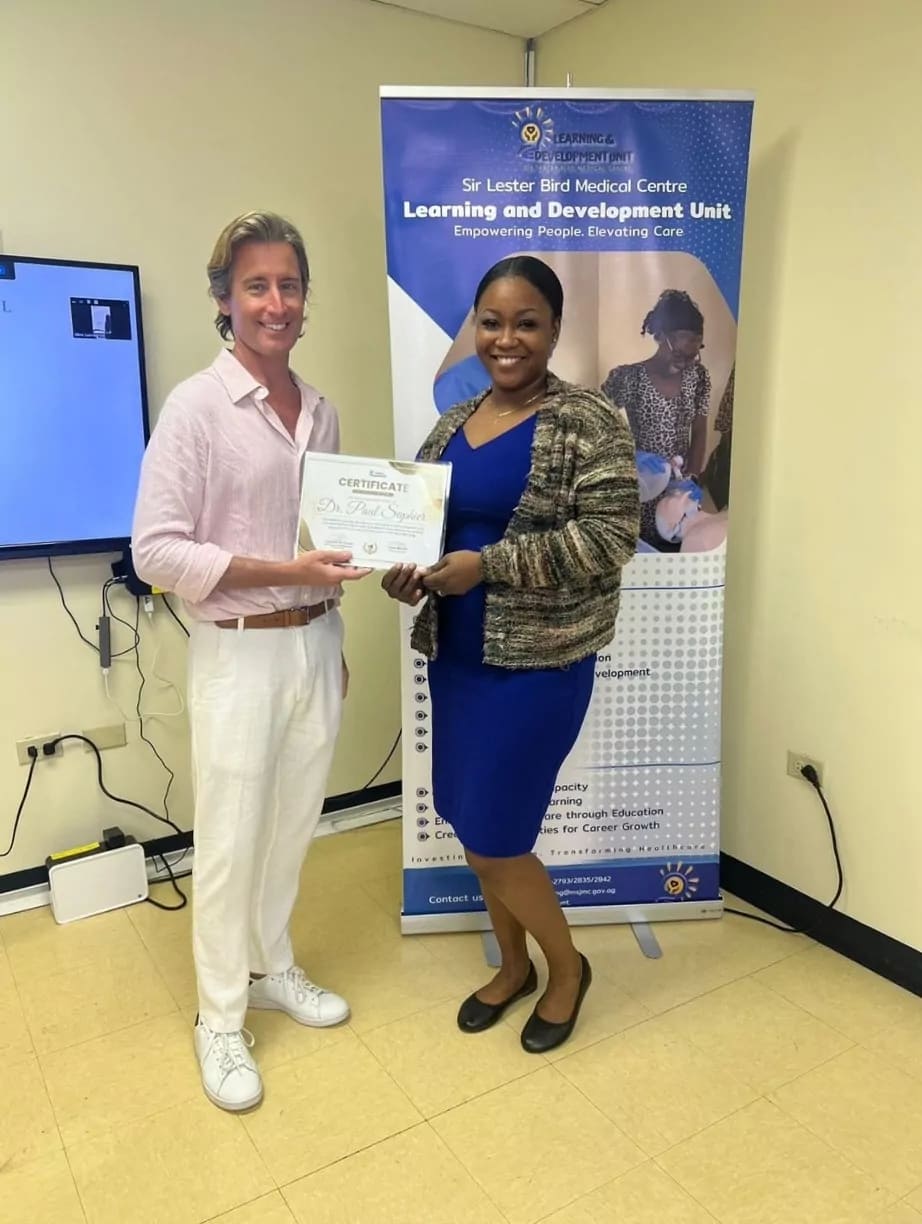
Antigua and Barbuda’s healthcare sector has embarked on an ambitious professional development initiative with the commencement of the Learning and Development Unit’s 2026 educational program. The inaugural sessions, conducted by renowned medical experts Dr. Paul Saphier and Dr. Nicole Saphier, addressed critical healthcare challenges through two comprehensive Continuing Medical Education (CME) modules.
The first session delivered an in-depth analysis of acute stroke management, emphasizing time-sensitive intervention protocols. Participants examined the implementation of mechanical thrombectomy procedures and explored adaptive strategies for both well-resourced and resource-constrained medical environments. The discussion highlighted systemic preparedness and clinical decision-making processes that significantly influence patient outcomes.
A subsequent presentation focused on breast cancer detection methodologies, reviewing current screening strategies, diagnostic pathways, and treatment outcomes. The facilitators presented population-specific data and trends relevant to Antigua and Barbuda’s healthcare landscape, enabling participants to contextualize international best practices within local healthcare delivery frameworks.
Program organizers emphasized the deliberate integration of evidence-based practice with equitable healthcare delivery principles. The sessions were specifically designed to bridge theoretical knowledge with practical application, ensuring that medical professionals can immediately implement learned techniques in clinical settings.
Dr. Shivon Belle-Jarvis, Medical Director of Sir Lester Bird Medical Centre, endorsed the program’s approach, stating that continuous professional development remains fundamental to health system strengthening. The Learning and Development Unit characterized its methodology as ‘intentional learning’ – a focused educational strategy that prioritizes clinically relevant content while maintaining patient outcomes as the central objective.
The Unit has committed to sustaining this practical, high-impact educational approach throughout 2026, with ongoing programs designed to enhance healthcare outcomes across the nation’s medical ecosystem.