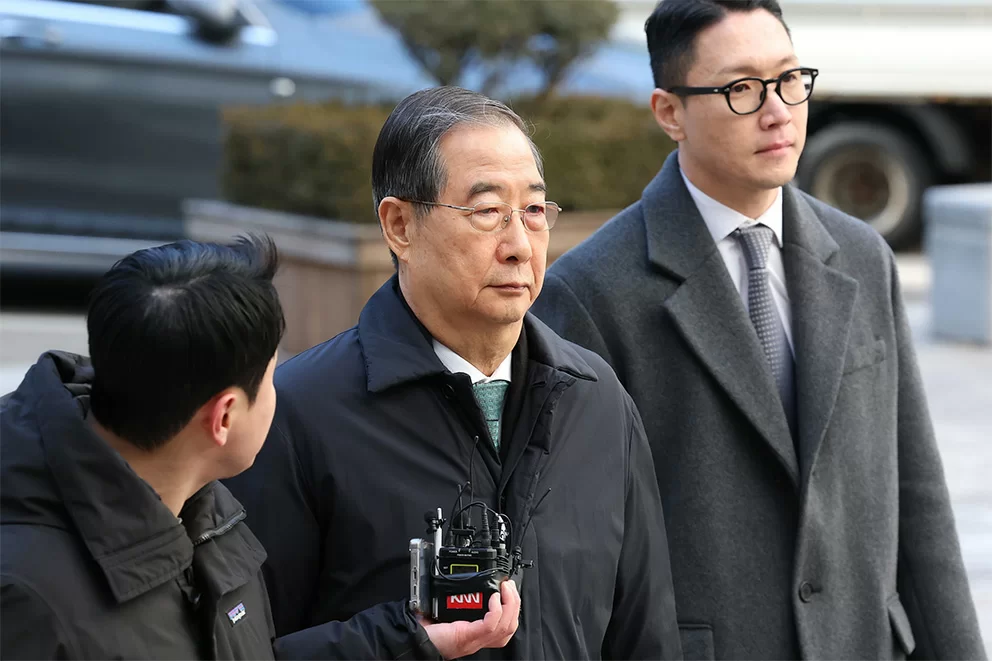
In a landmark ruling that has sent shockwaves through South Korea’s political landscape, the Seoul Central District Court has convicted former Prime Minister Han Duck-soo of rebellion for his involvement in ex-President Yoon Suk Yeol’s controversial December 2024 emergency declaration. The court handed down a severe 23-year prison sentence to Han, who served as one of three interim leaders during the crisis that ultimately led to Yoon’s impeachment.
The court characterized Yoon’s emergency declaration as a ‘self-coup’ attempt that fundamentally undermined South Korea’s constitutional order. During nationally televised proceedings, justices detailed how the deployment of military and police forces against parliamentary and electoral institutions constituted sedition that seriously endangered national stability.
Han faced particular condemnation for his efforts to procedurally legitimize the emergency decree through cabinet meetings, alongside charges of document forgery, destruction of evidence, and perjury. Despite Han’s defense claims that he had warned Yoon against the plan and denied most allegations, the court found he had ‘failed in his duty as prime minister’ and participated in rebellion ‘believing it would succeed.’
The ruling serves as a stark warning against actions that could return South Korea to its authoritarian past, where fundamental freedoms and democratic legal structures were systematically suppressed. Han, who previously served as prime minister under liberal President Roh Moo-hyun, briefly acted as interim president following Yoon’s removal but was himself quickly impeached over constitutional court appointment disputes.
Yoon remains imprisoned awaiting trial on multiple charges including rebellion, document forgery, and obstruction of his own cabinet. The former president has denied all allegations, labeling investigations ‘frustrated and manipulated.’ The emergency declaration period evoked memories of South Korea’s 1980s dictatorships, triggering both domestic political turmoil and international concern.
The case represents a critical juncture in South Korea’s democratic development, demonstrating the judiciary’s commitment to protecting constitutional foundations against executive overreach. Numerous other high-ranking officials from Yoon’s administration and military leadership face ongoing prosecutions for their roles in the crisis.