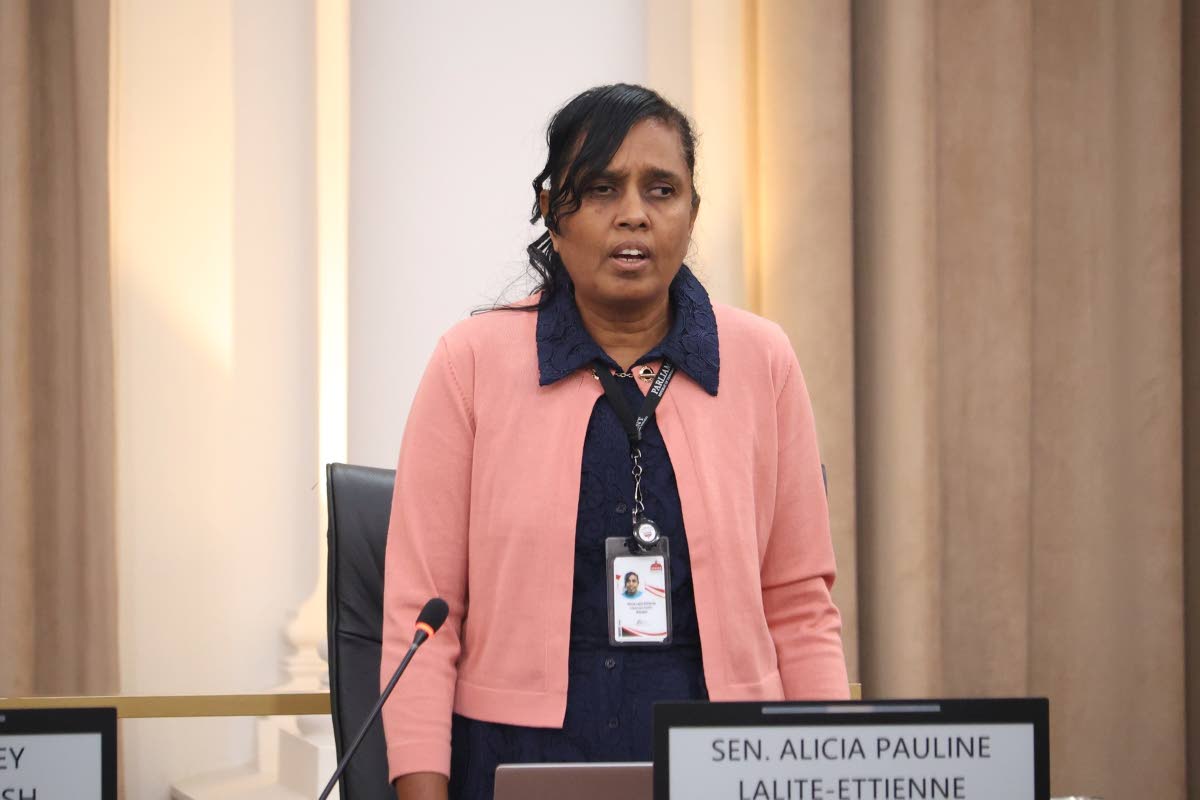
In a nuanced Senate deliberation on January 20, Independent Senator Alicia Lalite-Ettienne endorsed the government’s Motor Vehicles and Road Traffic (Amendment) Bill while advocating for practical adjustments to its grace period provisions. The visually impaired senator drew upon her husband’s experiences as a taxi driver to highlight systemic challenges in vehicle maintenance within Trinidad and Tobago’s import-dependent automotive ecosystem.
Senator Lalite-Ettienne articulated how sourcing specific vehicle components—particularly for models like the Toyota Yaris—often requires international procurement, with lead times extending to months rather than days. She emphasized that while the bill’s 3-7 day compliance window appears reasonable theoretically, it fails to account for logistical realities in developing nations without local manufacturing capabilities. The senator specifically requested implementation of a documentation system that motorists could present to law enforcement while awaiting parts, noting that current enforcement approaches lack necessary flexibility.
The legislative amendment, previously passed in the House of Representatives on January 16, establishes graduated grace periods for regulatory violations, allowing motorists to rectify issues before automatic fines trigger. Government Senator David Nakhid responded that discretion remains essential in enforcement, acknowledging that legislation cannot anticipate all practical complexities.
Opposition Senator Janelle John-Bates raised complementary concerns regarding administrative burdens on under-resourced police and licensing officers. She cited the 2018 case of Patrick Awong—detained for eight hours over a previously paid fine—as evidence of systemic vulnerabilities that could exacerbate under the new timeline pressures. Senator John-Bates warned that automated systems could generate penalties despite compliance if certification paperwork experiences processing delays.
Despite these concerns, Senator Lalite-Ettienne affirmed her fundamental support for the legislation, framing vehicle maintenance as a civic responsibility comparable to personal health management. The debate highlighted the ongoing tension between legislative idealism and implementational practicality in Trinidad and Tobago’s governance landscape.