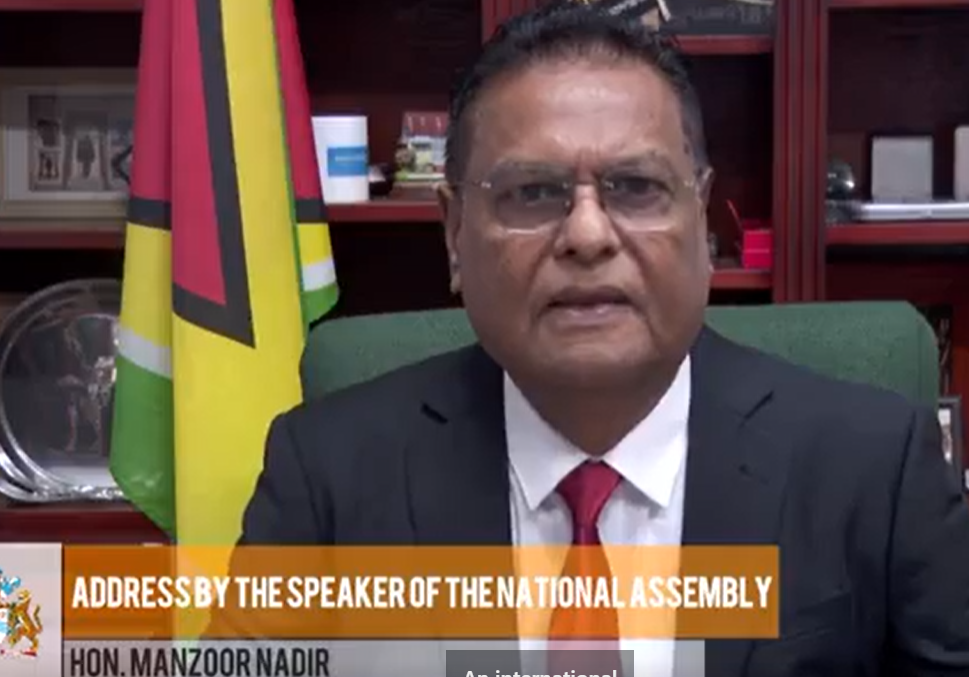
Guyana’s political landscape faces an unprecedented constitutional dilemma as National Assembly Speaker Manzoor Nadir reluctantly announced plans to convene a special parliamentary session next Monday. The meeting, scheduled for 10 AM, will determine the election of the country’s Opposition Leader—a position expected to be filled by Azruddin Mohamed, an international fugitive wanted by United States authorities for serious financial crimes.
Speaker Nadir, in a solemn address delivered Tuesday evening, expressed profound discomfort with the constitutional obligation forcing him to oversee an election that would potentially install a wanted criminal as Guyana’s official opposition leader. “I have found myself in this difficult position to hold the election of the Leader of the Opposition when I know that the presumptive Leader of the Opposition to be elected is an international fugitive,” Nadir stated, emphasizing the grave implications for the nation’s democratic integrity.
The political predicament stems from last year’s electoral results where Mohamed’s We Invest in Nationhood (WIN) party secured 16 parliamentary seats, making them the largest opposition bloc ahead of A Partnership for National Unity (APNU) with 12 seats and Forward Guyana Movement with a single seat. Despite Mohamed’s fugitive status, constitutional provisions appear to mandate his election as opposition leader due to his party’s numerical advantage.
Nadir, a veteran Guyanese statesman, issued a stern warning to opposition parliamentarians, stating that those voting for Mohamed would bear full responsibility for tarnishing the dignity of Guyana’s legislative body. “If opposition members of Parliament feel it morally right to elect an international fugitive, then the stain on our parliament and our country rests solely with them,” he declared, highlighting the moral contradiction between legal requirements and ethical governance.
The Speaker additionally criticized both the diplomatic community and segments of the media for amplifying calls to proceed with Mohamed’s election, suggesting that external pressure had complicated an already delicate constitutional process. Nadir repeatedly referred to Mohamed as an “international fugitive” throughout his address, underscoring the gravity of the situation facing Guyana’s democratic institutions.