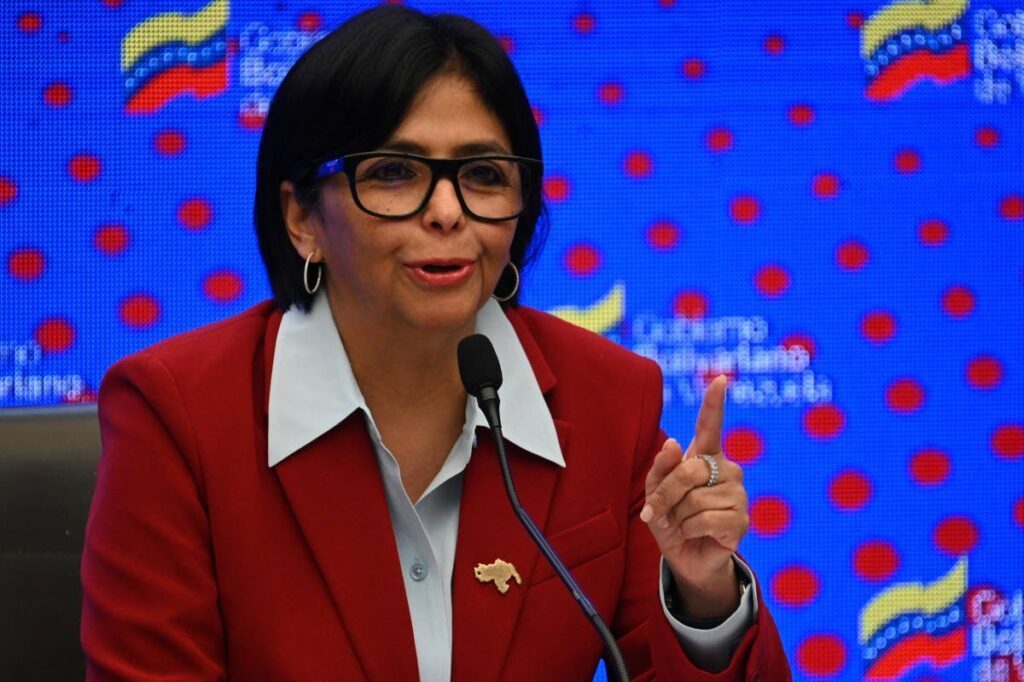
Amidst Venezuela’s political transformation with Nicolás Maduro’s imprisonment and US-backed interim president Delcy Rodríguez assuming power, Trinidad and Tobago’s Energy Chamber has highlighted the historical foundation for renewed energy cooperation between the neighboring nations.
While recent discussions have centered on natural gas imports from Venezuela’s Dragon field, the Chamber emphasizes that the energy relationship historically extended beyond gas to significant crude oil transactions. In 2000, Trinidad imported over 18 million barrels of Venezuelan crude, representing more than half of its total imports at approximately 50,000 barrels daily—a volume equivalent to Trinidad’s current domestic production.
The imported Venezuelan crude primarily supplemented declining domestic production for the Point-a-Pierre refinery, which had a processing capacity of 175,000 barrels per day. Beyond refinery feedstock, some Venezuelan crude was stored and re-exported through Point Fortin terminal, while other volumes were processed into specialized lubricant oils for export markets.
Venezuela’s state oil company PDVSA maintained active membership in the Energy Chamber (then South Trinidad Chamber) during the early 2000s, regularly participating in Trinidad’s energy conferences. This relationship gradually deteriorated, with Venezuelan crude imports ceasing entirely by 2009.
With domestic production now at approximately 53,000 barrels daily and continued decline, the Chamber suggests that refinery restart plans would necessitate new crude sources. A revitalized Venezuelan oil industry under interim leadership could potentially emerge as a strategic supplier, rebuilding the energy partnership that once flourished between the two nations.