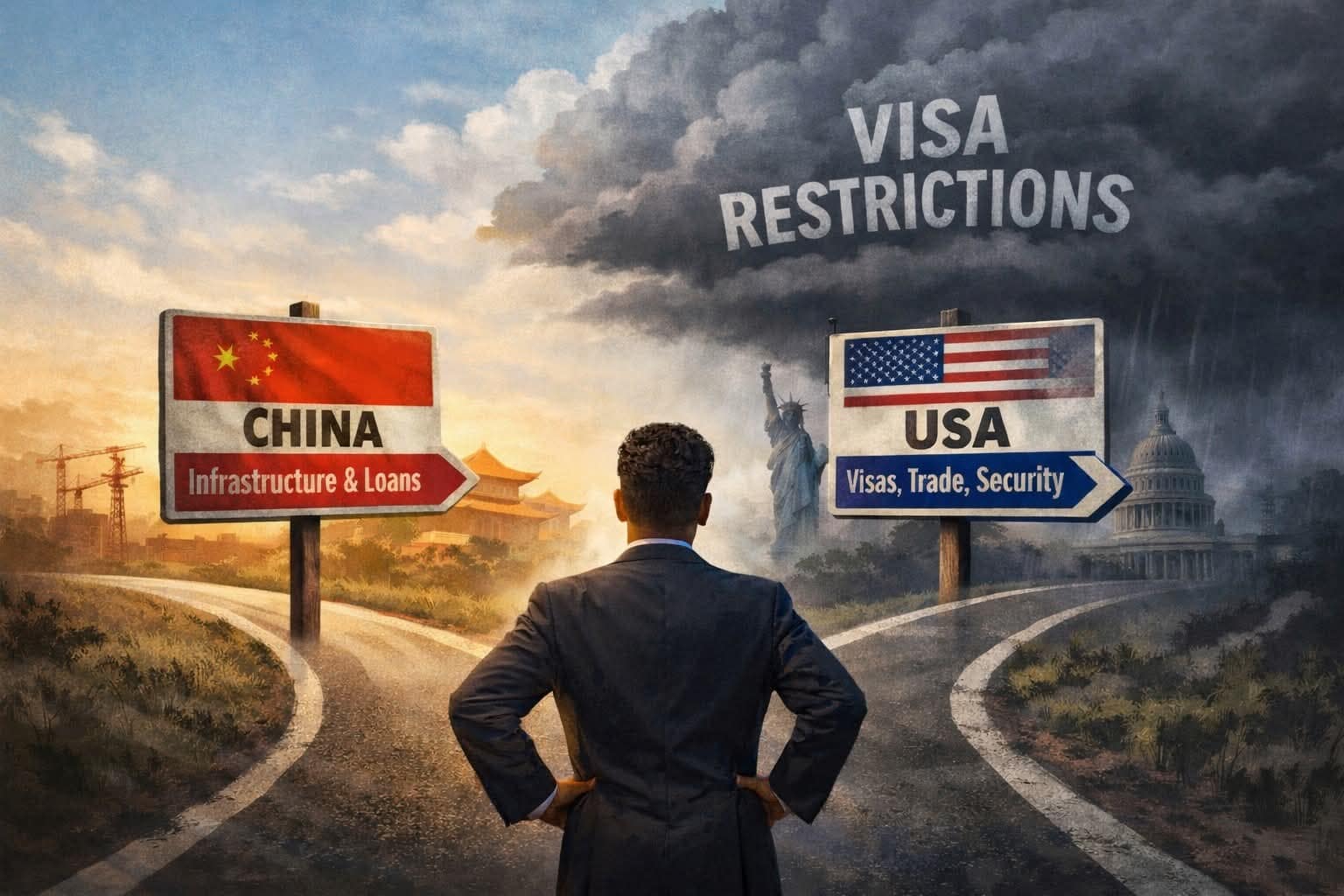
The recent imposition of visa sanctions against Antigua and Barbuda by the United States administration represents a calculated geopolitical maneuver rather than a mere response to alleged governance failures. While surface-level justifications cite concerns over drug trafficking and weaknesses in the Citizenship by Investment Program (CIP), a deeper examination reveals these accusations serve as pretexts for broader strategic objectives outlined in the US National Security Strategy of December 2025.
The 29-page security document explicitly articulates Washington’s intent to reassert the Monroe Doctrine and eliminate non-hemispheric competitors’ influence throughout the Americas. This strategic framework provides context for the punitive measures against the dual-island nation, which possesses neither military capabilities nor substantive threat capacity against the United States. With a population of merely 100,000 citizens and no history of aggression, Antigua and Barbuda’s designation as a national security threat appears strategically disproportionate.
The administration’s actions align with documented objectives to discourage regional partnerships with US adversaries, particularly China. Antigua and Barbuda’s significant Chinese assets, including an substantial embassy presence, have positioned the nation at the center of hemispheric power dynamics. The visa restrictions function as soft power instrumentation designed to create domestic pressure compelling policy changes.
Three primary objectives underlie the sanctions: securing a deportee memorandum of understanding, severing Chinese relations, and demonstrating US regional dominance. The characterization of Antiguan and Barbudan citizens as ‘destabilizing populations’ within security documents further reveals the administration’s perceptual framework. This situation places Antigua and Barbuda’s government in a profoundly challenging position, balancing domestic welfare against international geopolitical pressures.