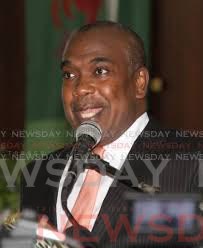
A prominent legal scholar from St Augustine has issued a forceful critique of Attorney General John Jeremy’s defense of recent US military operations targeting vessels allegedly involved in drug trafficking from Venezuela. In a sharply worded editorial published by Newsday, Fazir Khan questions the legal foundation and transparency of the government’s position regarding these controversial strikes.
The criticism centers on the Attorney General’s public assurance that the military operations are “consistent with international law” despite providing no factual basis or legal justification for this conclusion. Fundamental questions remain unanswered: the precise location of the vessels at the time of engagement (whether in international waters, Venezuelan territorial waters, or another nation’s maritime zone), the nature of evidence demonstrating drug-trafficking activities, whether proper warnings were issued prior to engagement, and the exact number and nationalities of casualties.
Particularly troubling is the AG’s reliance on an anonymous “international legal expert” whose opinion he cites but refuses to disclose or summarize. This approach, Khan argues, fails to meet basic transparency standards expected for decisions that potentially engage Trinidad and Tobago’s international responsibilities, bilateral relations, and fundamental human rights considerations.
The editorial highlights a striking contradiction in the government’s position: while reports indicate two Trinidad and Tobago nationals may have been killed in one strike, the AG simultaneously claims ignorance about whether any citizens were casualties while still certifying the overall legality of the operations. This raises serious questions about how the lawfulness of lethal force can be properly assessed without clarity on targeting criteria, rules of engagement, and civilian protection measures.
Khan emphasizes that principles of distinction, proportionality, and necessity are not abstract legal concepts but directly determine whether human lives were taken arbitrarily. The AG’s reported refusal to explain how summary destruction of vessels and loss of life reconcile with Trinidad and Tobago’s normal rule of law paradigm for addressing crime creates deep dissatisfaction with the official narrative.
The legal scholar concludes that the Attorney General’s job cannot be considered complete without three critical components: a thorough evidence-based assessment of the facts, a reasoned explanation grounded in international law demonstrating how these facts meet relevant legal tests, and appropriate disclosure to Parliament and the public—with exceptions only for genuinely sensitive operational details. If the legal opinion supporting the AG’s conclusion is sound, Khan argues, it should withstand public scrutiny.