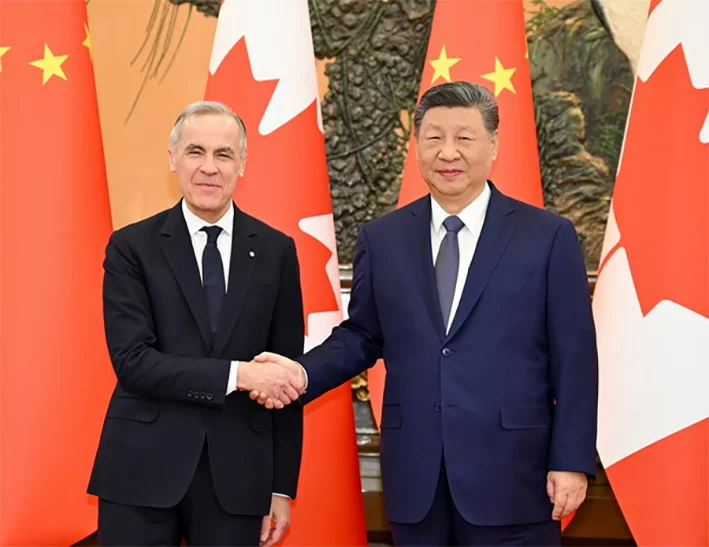
In a significant diplomatic breakthrough, Canadian Prime Minister Mark Carney and Chinese President Xi Jinping convened at Beijing’s Great Hall of the People on Friday, signaling a profound reset in bilateral relations following years of diplomatic strain. This landmark meeting—marking the first official visit by a Canadian leader to China in eight years—culminated in substantial trade concessions and a mutual commitment to enhanced cooperation.
President Xi characterized the renewed engagement as opening ‘a new chapter’ in Sino-Canadian relations, referencing ongoing dialogue since October 2023 to restore and expand collaborative efforts. Prime Minister Carney emphasized that strengthened bilateral cooperation could contribute to more robust global governance structures, which he noted face unprecedented pressures. ‘Together we can build upon the best of our past and forge a relationship suited to new global realities,’ Carney stated during the historic meeting.
The centerpiece of this diplomatic reengagement is a comprehensive trade agreement that dramatically reduces tariffs on key commodities. Canada will permit up to 49,000 Chinese electric vehicles (EVs) to enter its market at a preferential tariff rate of 6.1%—a substantial reduction from the 100% import levy imposed by the previous administration in 2024. This arrangement operates under Most Favored Nation status, though specific duration parameters remain unspecified.
Conversely, China committed to slashing tariffs on Canadian canola seeds from the current combined rate of 84% to approximately 15%, effective March 1. The agreement additionally eliminates temporary duties on canola meal, lobster, crab, and peas, potentially unlocking nearly $3 billion in new agricultural export opportunities for Canadian farmers.
Prime Minister Carney articulated Canada’s ambition to become a competitive player in the EV market through knowledge transfer from innovative partners like China. The leaders discussed expanded collaboration in clean energy sectors, including investments in energy storage systems and production infrastructure. Carney further outlined plans to modernize Canada’s energy grids and increase liquefied natural gas (LNG) exports to Asian markets.
This diplomatic thaw follows years of reciprocal trade restrictions that saw Canada mirror U.S. tariffs on Chinese EVs, steel, and aluminum, while China responded with heavy import duties on Canadian agricultural products. The new arrangements effectively restore pre-conflict tariff structures while incorporating enhanced benefits for both nations.
Analysts observe that this reconciliation occurs against the backdrop of escalating China-U.S. tensions and Trump’s ‘America First’ policies that adversely affected both Canada and China. While Ottawa maintains its alignment with Washington, this move toward pragmatic economic autonomy may signal to Beijing that economic decoupling from China isn’t inevitable among U.S. allies.
Carney notably described China as a ‘more predictable and reliable partner’ than the United States in the current complex global landscape. The leaders also found substantial common ground on geopolitical matters including Greenland, indicating broader strategic alignment beyond immediate economic interests.
This bilateral rapprochement represents a significant development in the evolving global order where U.S.-China rivalry predominates. The agreements create substantial opportunities for economic growth and strengthened bilateral ties as both nations navigate their respective interests within spheres of great power influence.