A NASA-led International Space Station mission concluded abruptly in the early hours of Thursday following an undisclosed medical emergency affecting one crew member, marking an unprecedented event in the orbiting laboratory’s quarter-century history.
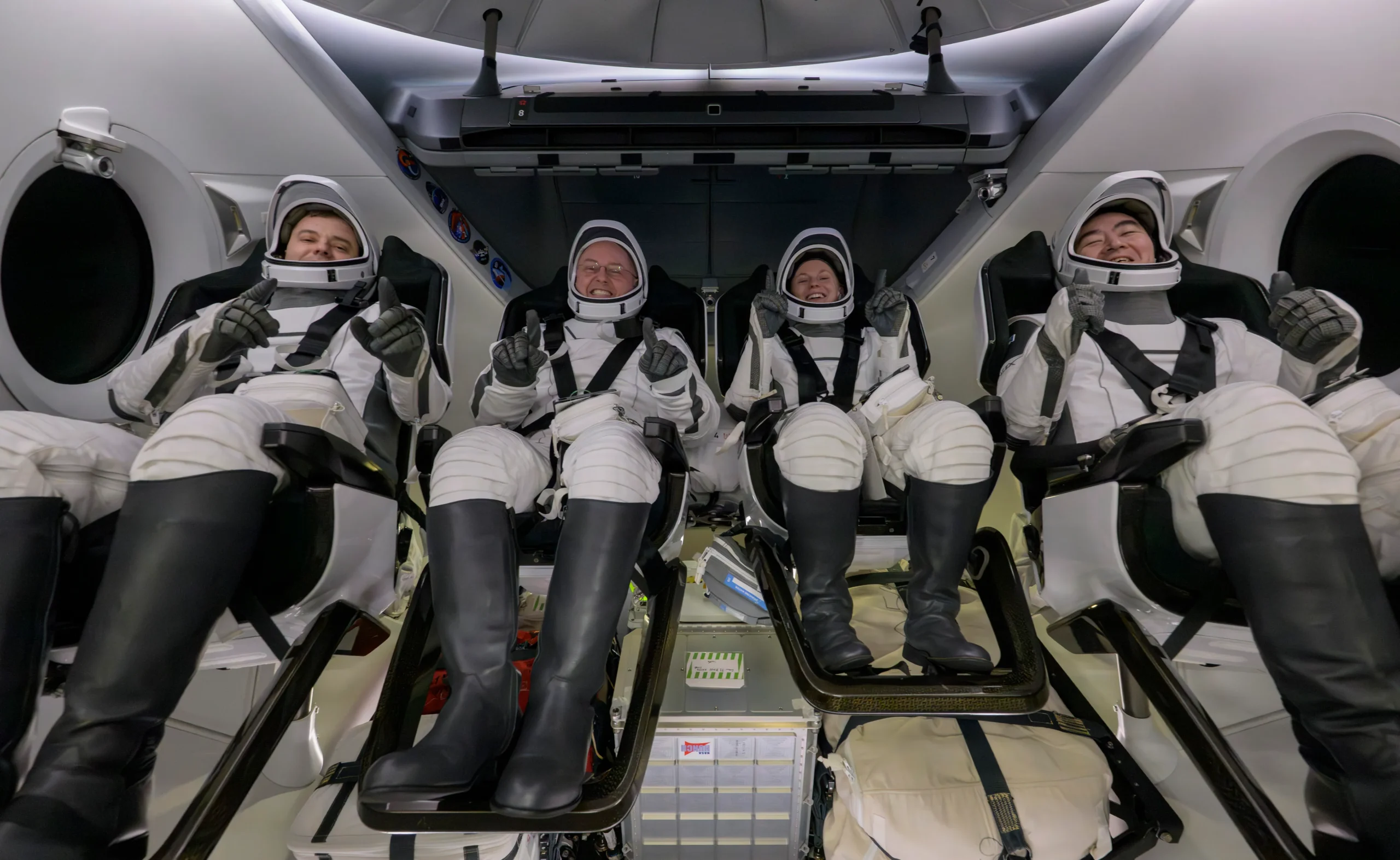
The four-person international crew, comprising astronauts from NASA, JAXA, and Roscosmos, executed an emergency return protocol that culminated in their SpaceX Crew Dragon capsule ‘Endeavour’ splashing down precisely in Pacific waters near San Diego at 12:41 a.m. PST. This emergency repatriation represents the first American-orchestrated mission truncation due to health concerns throughout the ISS program’s extensive operational timeline.
The hazardous descent sequence involved a ten-hour journey through space followed by a blistering atmospheric re-entry where the capsule’s thermal shielding withstood exterior temperatures approaching 1,900°C. In a striking juxtaposition to the intense return, recovery teams documented several dolphins swimming serenely near the bobbing spacecraft shortly after its ocean landing.
Mission commander Zena Cardman, 38, radioed flight control with the simple affirmation “It’s good to be home” upon successful completion of the emergency procedures. The multinational crew included NASA veteran Mike Fincke (58), JAXA’s Kimiya Yui (55), and Roscosmos cosmonaut Oleg Platonov (39).
Space agency officials have maintained strict confidentiality regarding the affected astronaut’s identity and specific medical condition, invoking standard medical privacy protections. NASA Administrator Jared Isaacman previously characterized the situation on January 8 as sufficiently “serious” to necessitate Earth-based diagnostic capabilities and specialized medical care unavailable aboard the station.
Despite the concerning circumstances, all crew members exhibited positive demeanors during initial recovery operations, offering smiles and thumbs-up gestures to documentation teams. Following 167 days exposed to microgravity’s physical effects, the astronauts received assistance onto medical gurneys for transportation to a nearby medical facility for comprehensive evaluation. After an overnight observation period, the team is anticipated to transition to NASA’s Johnson Space Center in Houston for continued monitoring and rehabilitation.