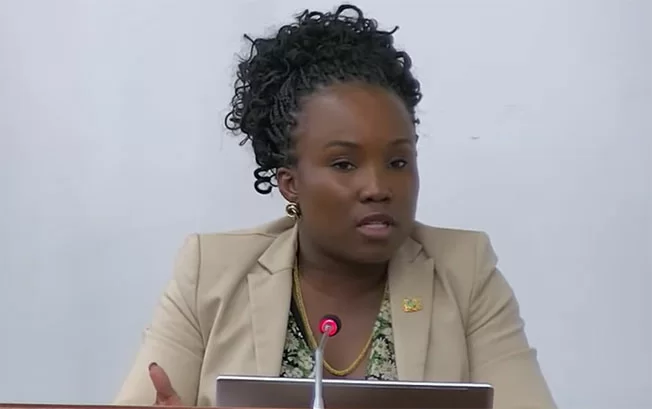
The National Assembly of Suriname witnessed intense deliberations on Thursday as parliamentary rapporteurs, chaired by NDP member Silvana Afonsoewa, examined proposed amendments to the Labor Advisory Council (AAC) Act. Central to the legislative revision is extending council members’ terms from two to five years—a move proponents argue would enhance institutional stability but critics warn requires stronger justification.
Afonsoewa opened deliberations by characterizing the tripartite AAC—bringing together government, employers and workers—as vital for social dialogue and labor policy formulation. She contended that the current two-year term proves insufficient for maintaining continuity, developing expertise and preserving institutional memory. The proposed five-year term, she asserted, would foster stability and improve advisory quality, particularly amid significant economic and labor market reforms. Afonsoewa noted that members frequently serve beyond two years in practice.
Opposition voices emerged swiftly. VHP representative Chuanrui Wang acknowledged continuity benefits but criticized the proposal’s inadequate substantiation. He cautioned that extended terms without mid-term evaluations, clear performance metrics or parliamentary accountability mechanisms risked stagnation rather than improved functionality. Wang emphasized that structural challenges—including limited capacity and advisory implementation—would persist merely through tenure extension.
NDP member Jennifer Vreedzaam raised governance concerns, questioning why five years specifically was necessary when existing legislation already permitted exceptions and reappointments. She warned that unchecked continuity might breed stagnation without evaluation benchmarks. Colleague Claudie Sabajo countered that the AAC itself identified two years as insufficient for developing quality advisories, arguing longer terms would reduce administrative burdens and enable deeper policy engagement. She simultaneously requested government transparency regarding past advisory implementations.
Representation issues took center stage when VHP’s Mahinder Jogi challenged whether the AAC adequately represented informal sector workers, small entrepreneurs and unorganized laborers. He deemed the amendment overly narrow and recommended broader legislative reconsideration. ABOP representative Edgar Sampie linked the reform to Suriname’s emerging oil and gas sector, stressing that international labor conventions demanded a robust, independent AAC. Without adequate resources and authority, he cautioned, the council risked becoming ‘a tiger without teeth.’
NPS representative Jeffrey Lau highlighted that no labor legislation proceeds without AAC consultation. He endorsed five-year terms as better aligned with governmental periods, facilitating medium-term planning and measurable policy outcomes. The council itself, he noted, considered five years operationally feasible.
While consensus existed on the AAC’s importance, divisions persisted regarding whether term extension sufficed or broader evaluation of composition and operations was prerequisite. Deliberations will continue Thursday with contributions from non-rapporteur assembly members.