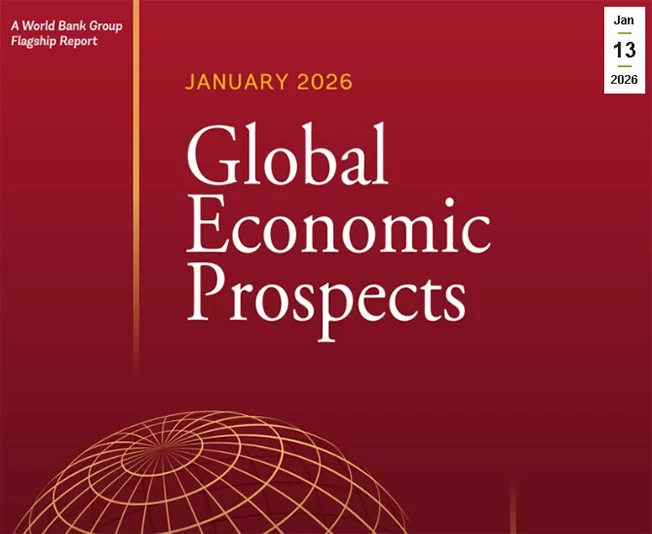
The World Bank has issued a cautiously optimistic yet concerning assessment of global economic prospects in its latest Global Economic Prospects report, published Tuesday. While upgrading its 2026 global growth forecast to 2.6%—a 0.2 percentage point increase from June’s projection—the institution simultaneously warned of significant headwinds including cooling international trade and widening disparities in living standards across nations.
This modest upward revision still represents a slowdown from 2025’s 2.7% growth rate, continuing what the Bank describes as potentially “the weakest decade for global economic growth since the 1960s.” The report acknowledges unexpected economic resilience throughout the past year despite what it characterizes as “historic escalation of trade tensions and policy uncertainty.”
Much of this uncertainty stemmed from the return of U.S. President Donald Trump to power last year and his administration’s implementation of broad import tariffs against major American trading partners. These measures significantly disrupted international supply chains and amplified volatility across global markets.
The economy’s relative resilience was attributed partially to accelerated goods imports by U.S. companies stockpiling ahead of anticipated tariffs, alongside surging investments in artificial intelligence technologies that provided substantial economic stimulus.
Looking ahead, the World Bank anticipates noticeable deceleration in global trade growth throughout 2026 as businesses complete inventory replenishment and the full effects of new trade restrictions become more pronounced. A tentative recovery in trade expansion isn’t expected until 2027, when nations presumably adapt to the new policy environment and uncertainty diminishes.
Perhaps most alarmingly, the report highlights growing disparities in living standards between countries despite moderate overall growth. World Bank Chief Economist Indermit Gill warned that the global economy faces slower growth in coming years than even during the economically troubled 1990s, while simultaneously confronting record levels of both public and private debt.
To avert prolonged stagnation and rising unemployment, Gill advocates for comprehensive policy measures including robust liberalization of private investments and trade, curtailment of government consumption growth, and substantial investments in emerging technologies and education systems across both emerging and developed economies.