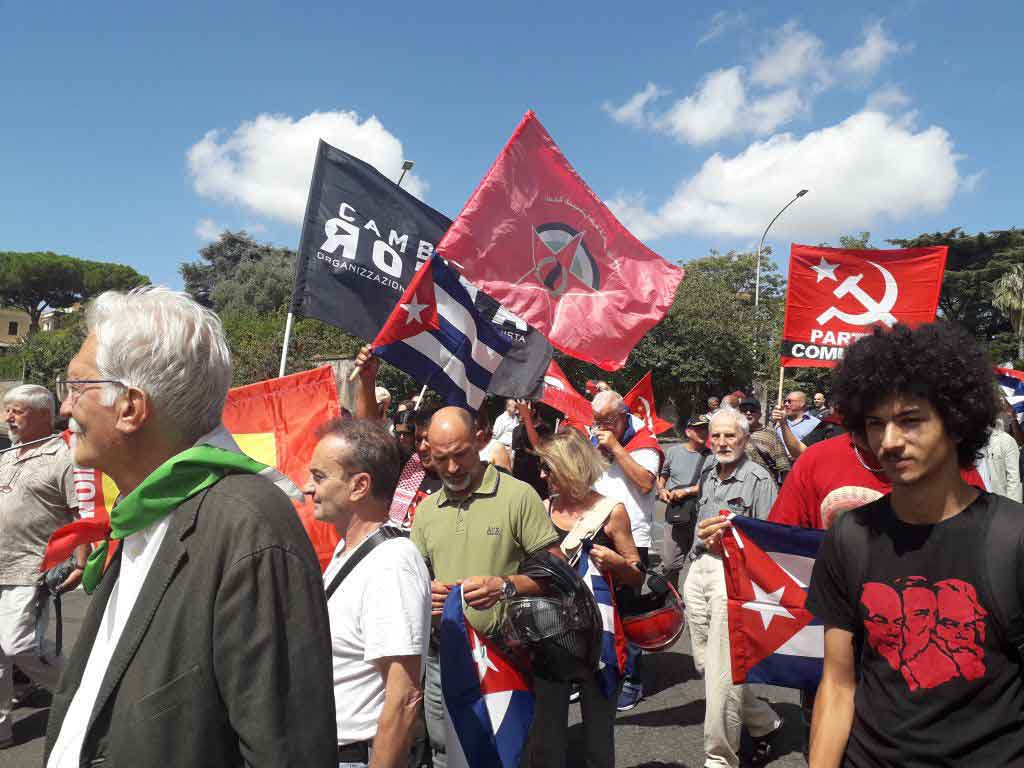
In a penetrating geopolitical analysis, Italian economist and Network of Communists leader Luciano Vasapollo identifies Cuba as a persistent target of US imperialism due to its symbolic significance as an alternative societal model. The defense of Cuba, he argues, extends beyond military and diplomatic dimensions into a continuous multi-front conflict encompassing economic, cultural, symbolic, and social domains.
Vasapollo, who co-founded the Italian chapter of the Network of Intellectuals in Defense of Humanity, contends that the escalating US aggression toward Cuba—particularly alongside concurrent attacks on Bolivarian Venezuela—represents neither historical coincidence nor temporary foreign policy divergence. This coordinated offensive against both nations instead exposes the fundamental character of the current geopolitical phase: imperial forces targeting regions where experiments in solidarity-based cooperation, social planning, and regional integration present viable alternatives to financial capital’s global market dominance.
The analyst emphasizes that these nations face retaliation precisely because they have successfully challenged hemispheric hegemony despite internal contradictions and operational challenges. By constructing frameworks of cooperative solidarity, socially-oriented planning, and regional integration, they have established practical alternatives to the global capitalist market structure.
This aggressive escalation, Vasapollo concludes, represents the logical manifestation of capitalism’s organic crisis. Drawing from Italian Marxist philosopher Antonio Gramsci’s theoretical framework, he characterizes this as a system that can no longer maintain control through ideological hegemony and increasingly relies on coercive measures to preserve its dominance.