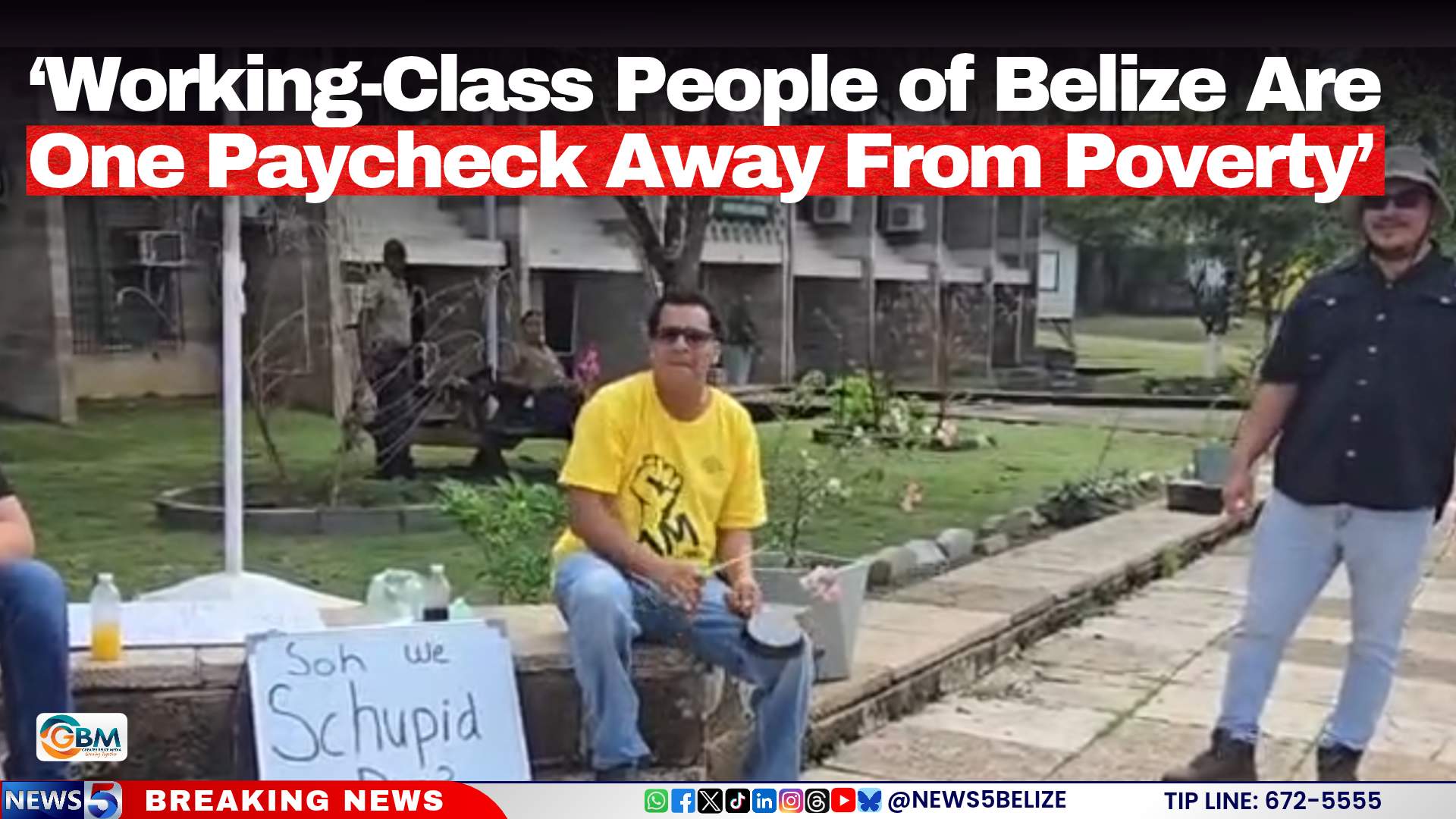
On November 13, 2026, a small group of Belizean demonstrators gathered outside the National Assembly building in Belmopan for the grassroots “Enough is Enough” protest, rallying national attention to a deepening affordability crisis that has pushed the nation’s working class to the financial brink. Leading the advocacy effort on the ground is Union Senator Glenfield Dennison, who emphasized that the event’s modest early turnout does not diminish the urgency of the demands being put forward to the Briceño administration.
Dennison, who serves as a formal representative for Belize’s cross-sector workforce, laid bare the brutal financial reality facing millions of ordinary households across the country: for the vast majority of low- and middle-income earners, monthly salaries are completely exhausted immediately after covering non-negotiable costs including rent, utility bills, and basic grocery supplies. “Our working families are now literally one missed paycheck away from falling straight into poverty, trapped in a vicious, unbreakable cycle of living hand to mouth with zero room for emergency savings or long-term financial stability,” he stated during his address to the assembled demonstrators.
He pushed back against the narrative that a small protest cannot drive meaningful systemic change, noting that the cost-of-living crisis is a universal burden that resonates with nearly every household in Belize, uniting disparate communities behind a shared call for action. “When an issue touches every single person trying to make ends meet, even a small, committed group of advocates can spark a nationwide movement that cannot be ignored,” Dennison explained.
The demonstration was organized as part of a broader advocacy push by the National Trade Union Congress of Belize (NTUCB), which first submitted a 11-point package of good governance reform proposals to the Briceño administration back in August, and has been waiting for formal government response ever since. Organizers confirmed they received reports that the protest had not received official government approval, and that parliamentary leadership had abruptly rescheduled the scheduled House of Representatives meeting from its originally planned November 13 date to the following Thursday.
Dennison framed the last-minute parliamentary rescheduling and lack of protest approval as deliberate censorship tactics designed to shield elected officials from public accountability. “This administration has made it abundantly clear they have no interest in listening to the voices of the people who elected them. They are acting like unelected kings and rulers, not public servants, going out of their way to move meetings and block peaceful assembly just to avoid having to face the legitimate grievances of the working class,” he added, vowing that the NTUCB and allied community groups would continue escalating their advocacy efforts until the government addresses both the cost-of-living emergency and the long-overdue governance reform package.