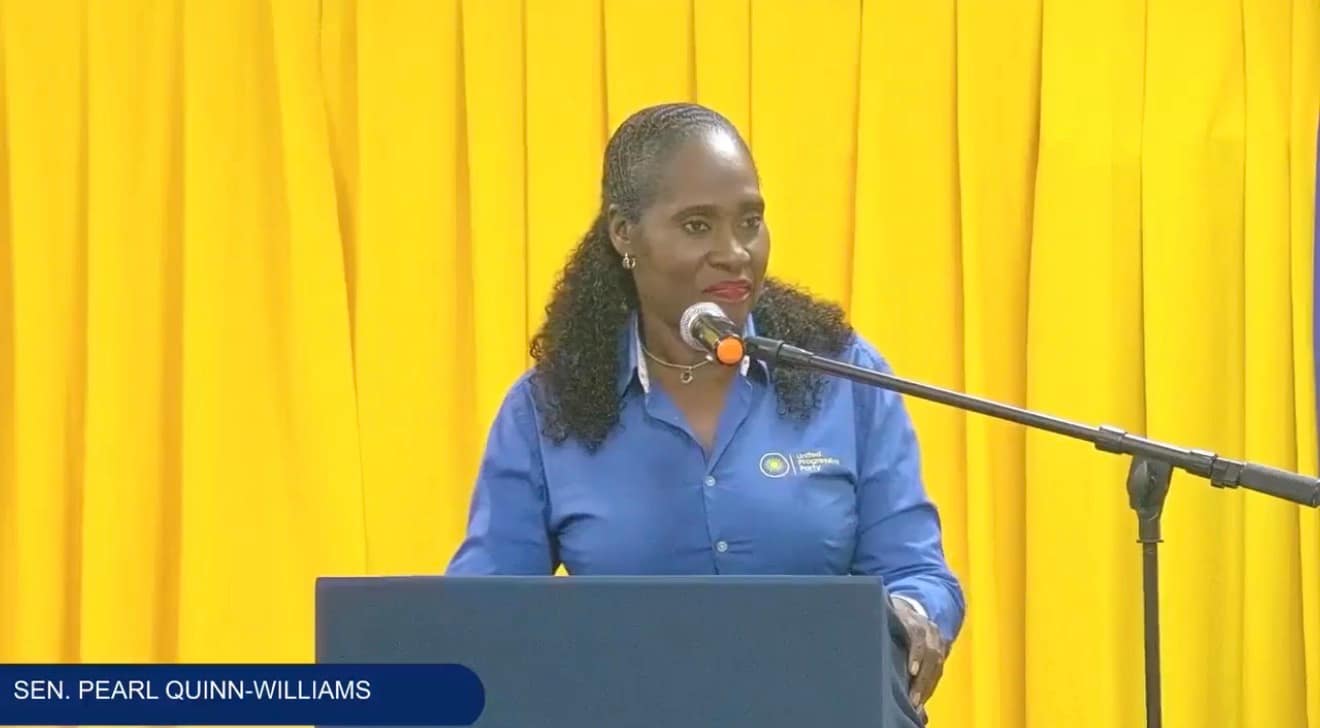
In a strongly-worded address during a United Progressive Party virtual rally, Senator Pearl Quinn Williams has challenged the government’s healthcare staffing strategy, demanding substantial investment in domestic nursing education before proceeding with the repatriation of Cuba’s medical contingent. The senator articulated deep concerns about the administration’s approach to replacing experienced Cuban medical professionals with healthcare workers from Ghana without establishing a robust local foundation first.
Williams emphasized that the Cuban medical brigade, having provided years of invaluable service to Antigua and Barbuda’s public health infrastructure, should remain during an extended transition period to ensure continuity of care while local candidates receive comprehensive training. She highlighted multiple unaddressed considerations in the proposed transition, including potential language barriers, the necessity for foreign replacements to familiarize themselves with the local healthcare system, and the critical question of how patient services would be maintained during the gap between personnel changes.
The senator proposed a strategic reallocation of resources, suggesting that funds currently designated for foreign healthcare workers should be redirected toward supporting local trainees and expanding medical scholarship programs. She advocated for a phased approach where the Cuban medical professionals would only be repatriated after sufficient numbers of qualified local healthcare workers are prepared to assume their responsibilities, characterizing this as a more sustainable and citizen-focused model for healthcare system reform.
Williams’ commentary extended beyond the immediate personnel concerns to address broader systemic challenges within the public health sector, noting severe operational strains resulting from staffing deficits, insufficient resources, and financial limitations at the Ministry of health.