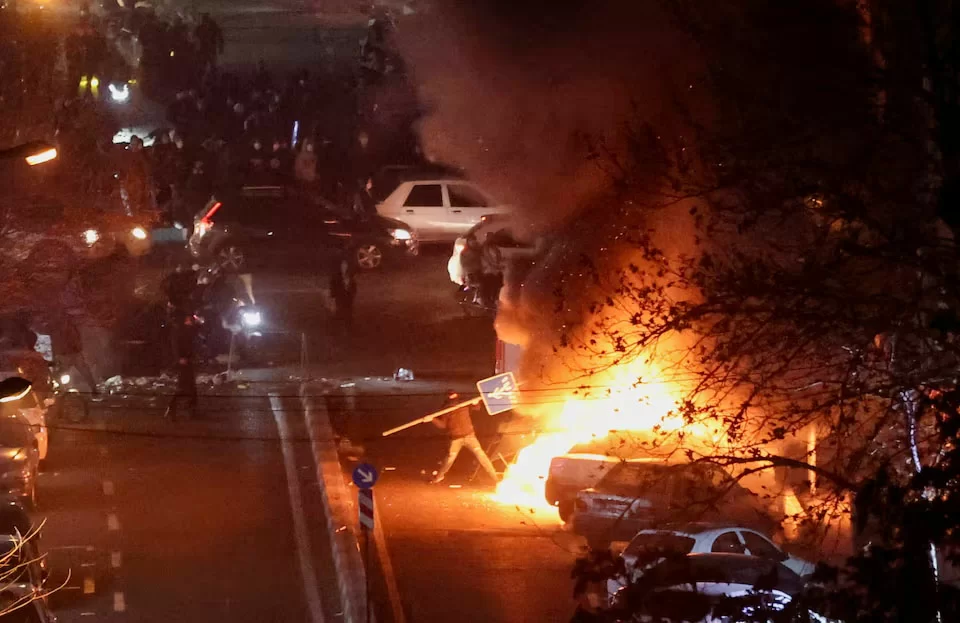
Amid Iran’s most significant civil unrest in years, former U.S. President Donald Trump has issued a provocative call for Iranians to sustain their demonstrations against the government. Through his Truth Social platform, Trump declared “help is on the way” while urging citizens to document the identities of security forces committing violence against protesters, warning that perpetrators would “pay a heavy price.”
The escalating crisis has reached alarming proportions, with Iranian officials acknowledging approximately 2,000 fatalities since protests began in late December—the first official death toll assessment. Human rights organizations present even grimmer statistics, reporting over 1,800 demonstrator deaths and more than 16,700 arrests, representing a substantial increase from previous estimates. Independent verification remains challenging due to widespread internet disruptions throughout the country.
When pressed by journalists to specify the nature of promised assistance, Trump declined to provide concrete details. His administration has already implemented stringent economic measures, including 25% import tariffs on nations trading with Iran—a significant oil exporter. Additionally, Trump confirmed considering military options in response to the government’s violent suppression of dissent.
The U.S. State Department has urgently advised American citizens to evacuate Iran immediately, including through land borders with Turkey and Armenia. Trump further cautioned during a CBS News interview that “very powerful measures” would follow if Iran proceeded with executing detained protesters. Reports from Kurdish organizations indicate a 26-year-old protester in Karaj faces imminent execution, though independent confirmation remains unavailable.
Communications infrastructure in Iran continues to be severely compromised, with partial restoration of telephone services while internet access remains largely blocked. In response, Elon Musk’s Starlink satellite internet service has been made available gratis to facilitate information exchange.
Initially sparked by economic grievances and currency devaluation, the protests have evolved into broader demands for systemic change. Iranian leadership has accused the United States and Israel of instigating unrest, labeling Trump and Israeli Prime Minister Netanyahu as “primary murderers” of the Iranian people.
China, a major consumer of Iranian oil, has joined Turkey, Iraq, the United Arab Emirates, and India in condemning U.S. tariff policies. Despite intense repression, no significant fractures have emerged within Iran’s ruling elite that has maintained power since the 1979 Islamic Revolution.
European nations including the United Kingdom, France, Germany, and Italy have summoned ambassadors to protest the violence. European Commission President Ursula von der Leyen described the rising death toll as “horrific,” while German Chancellor Friedrich Merz suggested the regime approaches its demise if reliant solely on violence to maintain power.
The coming weeks present critical challenges for Iran’s future as international scrutiny and pressure intensify.