In a landmark legal development that has sparked constitutional concerns, Suriname’s government has been ordered by a court to deliberately falsify phytosanitary certificates for timber exports, raising fundamental questions about judicial authority and administrative ethics.
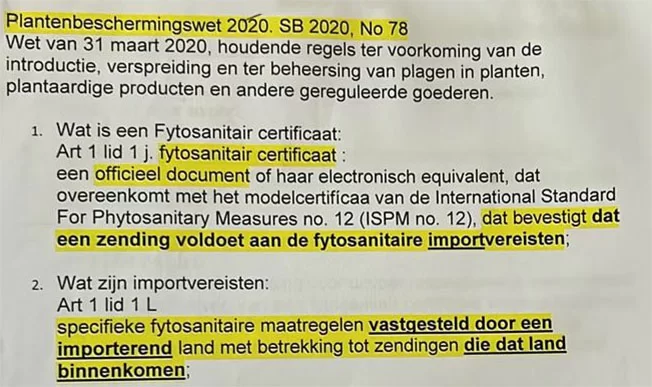
Attorney Diepak Jairam, representing the State in the timber export case, revealed that the court’s emergency ruling effectively compels the government to commit what constitutes a criminal offense. The court mandated that officials issue phytosanitary certificates – internationally recognized authentic documents – falsely identifying timber species as ‘Mora roundlogs’ when the exported wood actually comprises entirely different species.
“This isn’t merely an administrative formality but the deliberate falsification of an official international document,” Jairam emphasized in discussions with Starnieuws. “The court has ordered the State to consciously place incorrect information on an authentic document, which transcends normal administrative action and enters the realm of criminal behavior.”
During proceedings on December 30th, Jairam explicitly requested the judge distinguish between routine administrative actions – governed by general principles of proper administration – and actions constituting criminal offenses. “The court was essentially ordering the commission of a crime, not merely tolerating policy,” Jairam stated.
Notably, the judge acknowledged that accurate timber identification would prevent export to India, yet proceeded to issue the controversial order on New Year’s Eve. Jairam characterized the verdict as “inherently contradictory and legally problematic,” comparing it to “allowing a burglary because the perpetrator has already invested in breaking in.”
The attorney clarified that principles of proper administration cannot apply to criminal acts: “With offenses, there are no interest assessments or reasonableness tests. The simple rule applies: it must stop.”
The State has now filed an appeal, transforming the dispute beyond timber exports into a constitutional question: Can courts legally compel governments to deliberately falsify information on internationally recognized certificates? This case establishes a precarious precedent regarding the separation of powers and the limits of judicial authority over administrative functions.