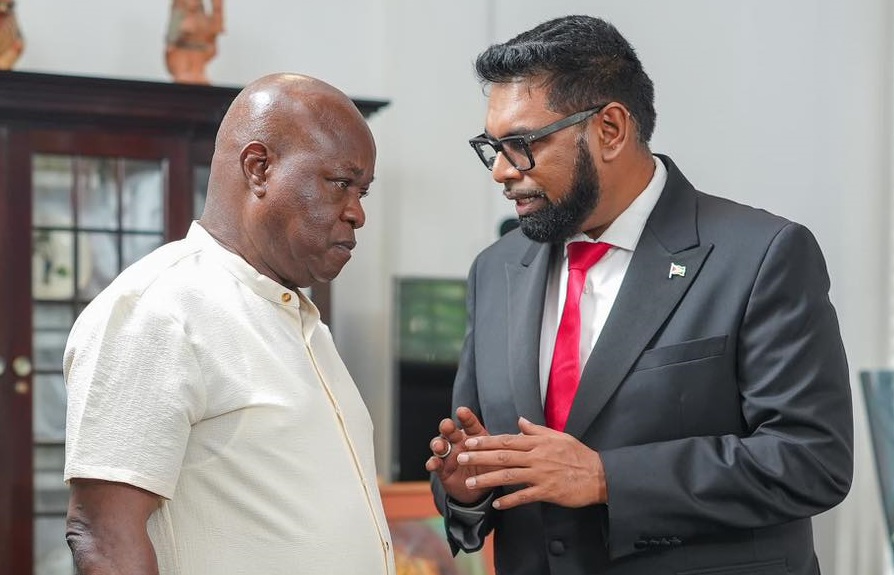
Guyanese President Irfaan Ali maintained a firm stance of silence on Friday regarding two sensitive diplomatic matters involving the United States, deflecting mounting pressure from political opponents demanding governmental transparency. The President declined to elaborate beyond an official statement issued days earlier concerning ongoing negotiations with the US about potentially relocating third-country nationals to Guyana.
When pressed by journalists in Rosignol, West Coast Berbice, about whether an agreement had been reached to accept US deportees rejected by their native countries, President Ali simply referenced the January 5th statement from Foreign Secretary Robert Persaud. “You’ve heard a statement out of the Foreign Secretary. There is nothing to add to that statement at this time,” the President asserted.
The previously released communique indicated that Guyana and the US were engaged in “productive discussions on a framework of understanding” aligned with Guyana’s national priorities while simultaneously supporting American objectives.
This diplomatic reticence sparked sharp criticism from opposition leaders. Aubrey Norton, leader of the People’s National Congress Reform and A Partnership for National Unity (APNU), condemned the potential acceptance of non-Guyanese deportees as “unacceptable,” arguing that welcoming individuals deemed undesirable by another society would prove detrimental to Guyana.
Norton, a political scientist and former foreign service officer, employed a striking environmental analogy, comparing the potential migrant transfer to dumping toxic materials across international borders. “APNU cannot understand the logic behind accepting deportees that another society does not want,” he stated, demanding immediate cessation of these “insane” negotiations that he believes contradict national interests.
Simultaneously, President Ali similarly avoided commentary on another contentious issue: the United States’ removal of Venezuelan President Nicolás Maduro to face trial in New York on drug and weapons charges. Norton criticized this action as a violation of international law, emphasizing that all international proceedings should occur within established legal frameworks.
While refusing to address the Maduro situation directly, President Ali had previously expressed his position on social media platform X on January 3rd, stating that “stability, respect for law, and democratic transition are critical to the future of Venezuela and the broader Americas.”
The developments occur against a backdrop of strengthened security and military cooperation between Guyana and the United States, with Guyana and Trinidad and Tobago remaining key US allies in the region. Opposition groups including the We Invest in Nationhood and the Forward Guyana Movement have called for parliamentary scrutiny of these diplomatic engagements, advocating for greater transparency in international agreements.