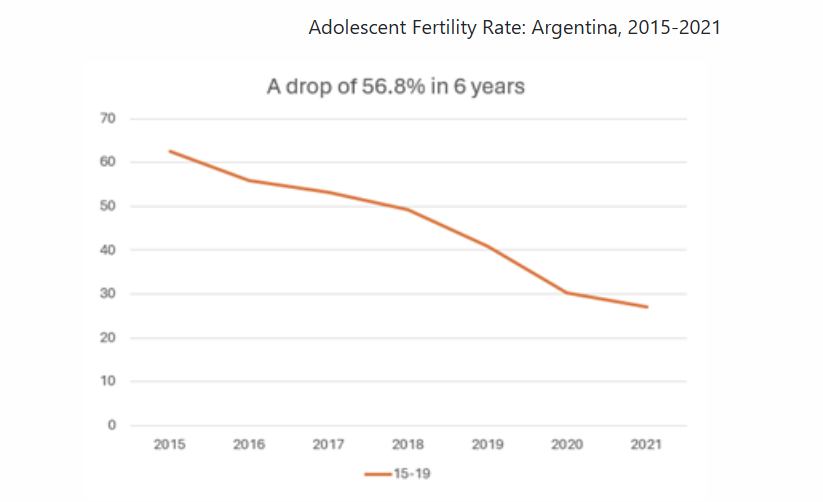
Recent data from multiple national studies challenges long-standing assumptions about the relationship between abortion legalization and adolescent sexual behavior. Evidence from Barbados, Guyana, and now Argentina demonstrates that increased access to legal abortion services correlates with significant reductions in teen fertility rates rather than promoting increased sexual activity as opponents claim.
According to the CEDEs Annual 2022 Report analyzing Argentina’s experience with legal abortion, the country implemented a tiered approach to reproductive healthcare access. The policy granted full autonomy to teenagers aged 16-17, provided independent access for those 13-15 when no serious medical risk was present, and required adult accompaniment only for children 12 and younger.
The results were striking: Argentina’s adolescent fertility rate among 15-19 year olds plummeted from 62.6 to 27 per 1,000 women—a dramatic 57% reduction—within just six years of implementation. This pattern mirrors experiences in Caribbean nations where abortion legalization preceded similar declines. Barbados witnessed a 53% overall reduction in abortions at Queen Elizabeth Hospital and a 58.9% decrease among teenagers in the decade following legalization in 1983. Similarly, Guyana’s abortion rate dropped 20% below pre-legalization levels after 1995.
These findings directly contradict claims that legal abortion access encourages “licentious sexual activity” among youth. Instead, the evidence suggests that comprehensive reproductive health policies combining access with education effectively reduce adolescent pregnancy rates. The data indicates that evidence-based health policy rather than fear-based approaches produces measurable improvements in public health outcomes.
ASPIRE, a pro-motherhood, pro-choice advocacy group operating across six Caribbean countries, emphasizes that replacing obstacles with access and ignorance with education represents a more effective approach to reproductive health policy. The organization promotes continued research and dialogue with civil society and governments to advance fairness and justice in reproductive healthcare across the region.