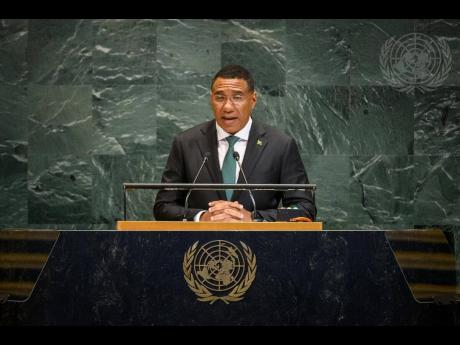
Prime Minister Andrew Holness has articulated Jamaica’s deliberate approach to international diplomacy amidst escalating geopolitical tensions surrounding Venezuela. Speaking at the ‘Heal the Family, Heal the Nation’ National Day of Prayer service in Portmore, St. Catherine, Holness emphasized that Jamaica’s primary responsibility remains national security rather than engaging in unnecessary foreign entanglements.
The Prime Minister’s comments follow the controversial January 3rd seizure of Venezuelan President Nicolás Maduro by United States military forces, though Holness carefully avoided direct reference to the operation. Instead, he highlighted Jamaica’s consistent foreign policy positions established well before current developments, stating that research would demonstrate the nation’s early stance on these matters.
Holness rejected assertions that Jamaica’s cautious diplomacy represents abandonment of principle, asserting that the nation has consistently served as “the strong voice of reason for small developing countries globally.” His administration maintains that Jamaica’s foreign policy balances multiple considerations including rule of law, human rights, democracy, and non-intervention in sovereign states’ affairs.
The political context includes vigorous debate within Jamaica’s opposition People’s National Party, regional leaders, and international observers regarding sovereignty, international law, and Caribbean security. The US operation that extracted Maduro and his wife to face drug trafficking charges in New York has raised significant concerns about regional stability and the principles of international intervention.
Jamaica’s historical position dates to January 2019 when it joined 18 Organization of American States members in refusing to recognize the legitimacy of Maduro’s presidential term. Foreign Affairs Minister Kamina Johnson Smith clarified that this decision reflected Jamaica’s commitment to fundamental values while maintaining concern for the Venezuelan people’s welfare.
The opposition PNP has urged stronger support for international legal principles and clearer positioning regarding Venezuela, warning that force-driven regime change poses serious regional risks. Meanwhile, CARICOM leaders have expressed grave concern while advocating diplomatic solutions that respect Venezuelan sovereignty and dignity.
Former Prime Minister Bruce Golding provided critical context, describing the Maduro operation as part of a rapidly shifting global order influenced by Trump-era policies. Golding warned that post-World War II norms protecting sovereignty are eroding, creating a vulnerable position for Caribbean nations caught between geopolitical powers. He invoked historical parallels, suggesting the region faces challenges reminiscent of colonial eras that require careful navigation to preserve hard-won sovereignty.