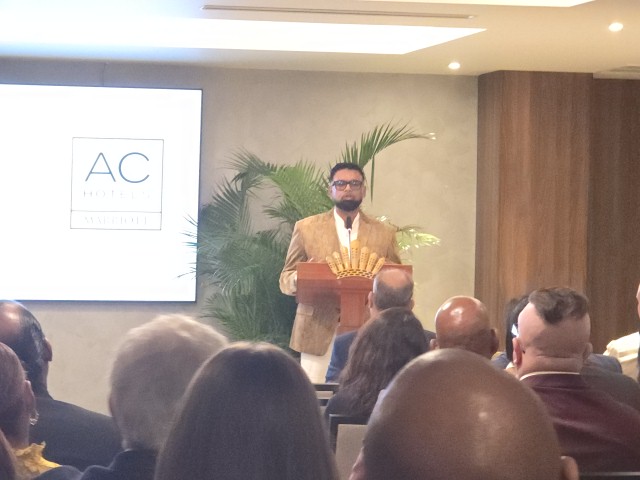
President Irfaan Ali of Guyana has emphatically dismissed any possibility of yielding to potential United States pressure to negotiate a territorial settlement with Venezuela regarding the long-standing border controversy. Speaking to journalists during the inauguration of the AC Marriott Hotel in Ogle, East Coast Demerara, President Ali underscored that national security and territorial integrity remain non-negotiable priorities for his administration.
‘The safety and security of the Guyanese people, along with the integrity of our borders and sovereignty, will never be compromised,’ President Ali asserted, addressing speculation about potential US diplomatic intervention. While no formal request has been made by Washington, international relations analysts suggest the Trump administration might seek to broker an agreement ensuring unimpeded access to oil-rich zones in the Essequibo region, both onshore and offshore.
The United States has consistently recognized Guyana’s existing borders across both Democratic and Republican administrations. Despite Guyana’s confidence in its case before the International Court of Justice regarding the validity of the 1899 Arbitral Tribunal Award, experts anticipate continued Venezuelan claims over the 160,000-square-kilometer Essequibo Region and its adjacent oil-abundant Atlantic waters.
President Ali’s statements follow recent US actions in Venezuela that included the capture and extradition of President Nicolás Maduro and First Lady Cilia Flores to face charges related to narcotics, terrorism, and weapons violations. US President Donald Trump has declared that his administration would temporarily ‘run’ Venezuela, utilizing the nation’s oil revenues for its benefit.
Addressing regional security concerns, President Ali highlighted significant shifts in the Caribbean’s democratic and security landscape, emphasizing the importance of stability in combating international criminal networks. He warned against complacency, noting that Guyana remains vulnerable to global networks influenced by events in other regions.
The Guyanese leader also pointed to notable security improvements, citing a 25.5% reduction in serious crimes in 2025—the lowest in a decade—attributed to enhanced technology and community partnerships in law enforcement. ‘We are partnering with technology, innovation, and communities because investments depend heavily on a stable and secure environment,’ President Ali concluded.