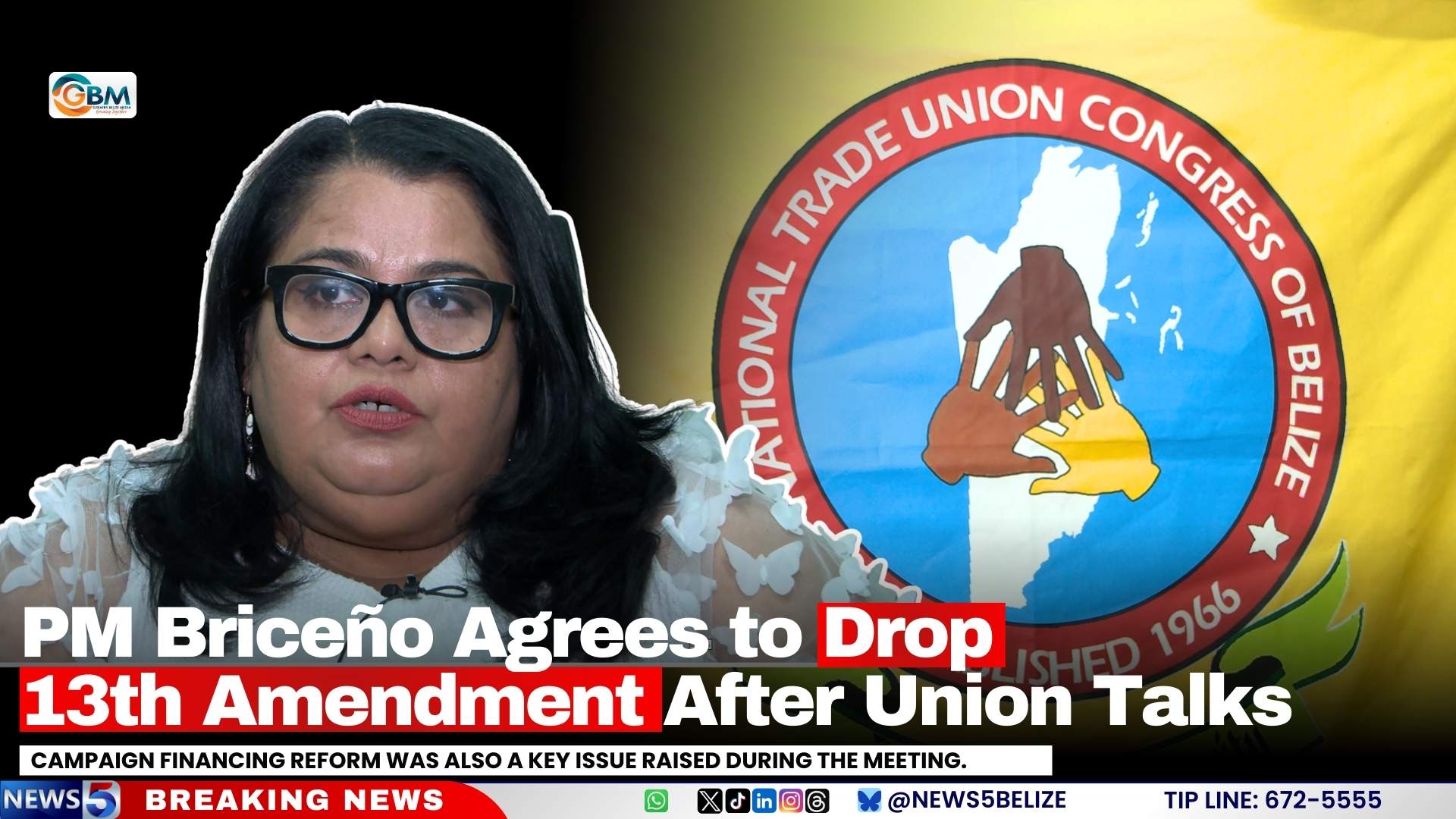
In a significant policy reversal, the Belizean government under Prime Minister John Briceño has formally agreed to withdraw the proposed 13th Constitutional Amendment following intensive negotiations with the National Trade Union Congress of Belize (NTUCB). The breakthrough commitment was secured during a high-level meeting convened on December 15, 2025, marking a victory for organized labor and legal professionals who had vigorously opposed the constitutional changes when they were initially proposed for public consultation last year.
NTUCB President Ella Waight confirmed the government’s commitment to pursue alternative legislative pathways rather than constitutional modification. “The proposed measures will now be implemented through revisions to the criminal code,” Waight stated, emphasizing that this approach “will require states of emergency to receive approval through the National Security Council—a more progressive and inclusive mechanism that properly addresses the matter.”
The dialogue between government and union representatives extended beyond constitutional matters to address comprehensive campaign finance reform. Waight articulated concerns that unregulated political funding mechanisms perpetuate systemic corruption and undermine the state’s capacity to address workers’ legitimate demands. “The current system allows businesses and wealthy entities to sponsor political parties during elections, creating obligations that must later be repaid through preferential treatment—directly diverting resources that should fund essential worker benefits, including fair salary adjustments,” she explained.
Additional critical agenda items included electoral redistricting procedures, occupational safety legislation, public sector modernization, and resolving pension payment delays. According to Waight, Prime Minister Briceño committed to completing the redistricting process by December 2026 and established a framework for quarterly meetings with labor representatives to ensure ongoing collaboration.
The NTUCB characterized this sustained engagement as fundamental to safeguarding worker rights and enhancing accountable governance structures throughout Belize, signaling a new chapter in government-union relations aimed at transparent and equitable policymaking.