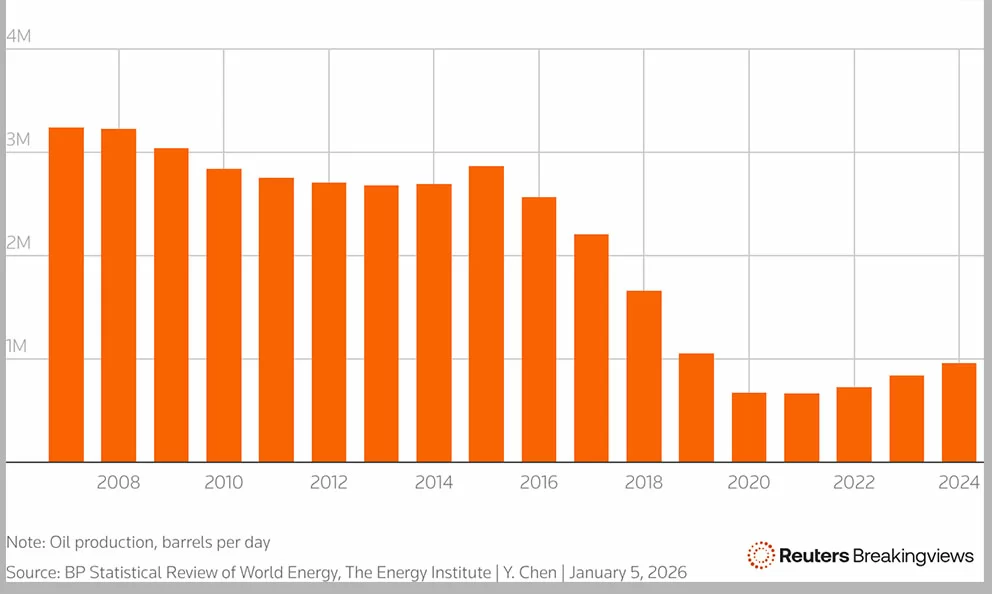
In a significant geopolitical shift, the Trump administration has secured an agreement to redirect Venezuela’s oil shipments originally destined for China, marking a dramatic turnaround in Washington’s approach to Caracas. The deal, which involves importing and refining up to $2 billion worth of previously sanctioned Venezuelan crude, represents President Trump’s strategic maneuver to gain control over the South American nation’s substantial oil reserves.
While Nicolás Maduro’s socialist allies maintain power in Venezuela, interim President Delcy Rodriguez is navigating a delicate balance between condemning Maduro’s recent abduction and initiating cooperation with Washington under Trump’s pressure. Sources within state oil company PDVSA indicate negotiations have advanced significantly, though Caracas has yet to officially confirm the export agreement.
The United States announced plans to process and sell approximately 50 million barrels of oil previously immobilized by American sanctions. President Trump declared via Twitter that proceeds would remain under his administration’s control, purportedly benefiting both the Venezuelan people and US interests. This anticipated supply increase triggered an immediate market response, driving crude prices down by approximately 1%.
China has vehemently condemned Washington’s actions, with Foreign Ministry spokespersons labeling the US a ‘bully’ and accusing it of gross violations of international law and Venezuelan sovereignty. As last year’s importer of nearly 390,000 daily barrels of Venezuelan oil, China is now reportedly considering increased imports from Iran and Russia according to trading sources.
The US military intervention in Venezuela, which targeted Maduro’s capture, has drawn international condemnation from Russia, China, and other Venezuelan allies. Washington’s partners express particular concern over the precedent of abducting a sitting head of state, especially amid Trump’s additional threats toward Mexico and Greenland.
Recent operations in Caracas resulted in dozens of casualties, including 23 Venezuelan soldiers and 32 members of Cuban military and intelligence services. Maduro, who has ruled since 2013, denied drug trafficking charges in a US court Monday while maintaining his claim as Venezuela’s legitimate president.
Despite ousting Maduro, the US appears temporarily prioritizing cooperation with his senior allies to ensure stability, focusing particularly on revitalizing the oil industry through American corporate involvement. Political reforms and prisoner releases seem secondary concerns for now.
Venezuelan opposition leader María Corina Machado, currently in exile, seeks to return for what she believes would be a victorious free election. Meanwhile, Washington warns high-ranking Maduro-era officials including stubborn Interior Minister Diosdado Cabello and Defense Minister Vladimir Padrino, both under US sanctions and criminal prosecution.
The US is additionally pressuring Venezuela to expel advisors from China, Russia, Cuba, and Iran, while Russia has deployed naval vessels to escort an aging oil tanker attempting to circumvent American blockade measures.
Recent Atlantic Ocean confrontations saw the US Coast Guard attempting to seize a Venezuela-related oil tanker after extended pursuit, with Russian naval ships operating nearby—highlighting ongoing tensions surrounding sanction enforcement and control over Venezuelan oil exports.