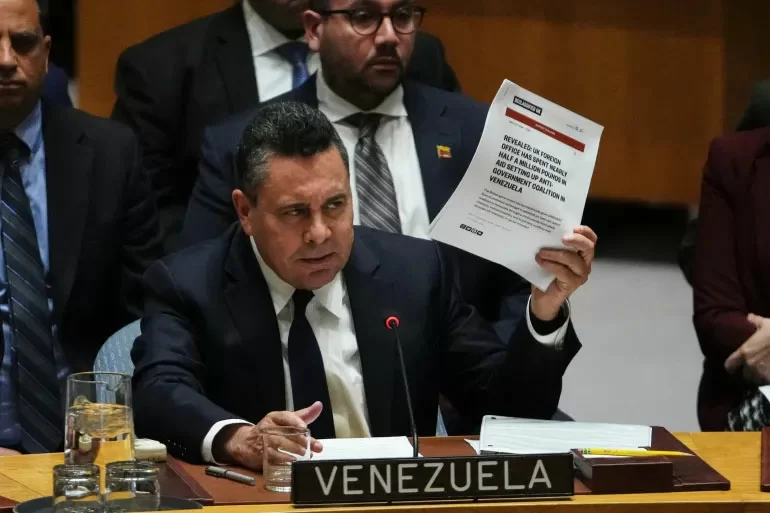
The United Nations Security Council convened an emergency session in New York following the controversial apprehension of Venezuelan President Nicolás Maduro and his wife by US special forces. The operation, which multiple member states characterized as a violation of international law, has sparked unprecedented diplomatic backlash against Washington.
Venezuela’s UN Ambassador Samuel Moncada denounced the mission during Monday’s urgent meeting, labeling it “an illegitimate armed assault without any legal justification.” This sentiment found resonance across the diplomatic spectrum, with unusual allies Russia, China, Cuba, and Colombia jointly condemning the action.
The criticism extended beyond traditional US adversaries. Mexico and Denmark—typically aligned with American interests—delivered sharp rebukes. Mexican representatives emphasized the Security Council’s obligation to avoid double standards, while Danish diplomats pointedly referenced border inviolability, an apparent allusion to former President Trump’s previous threats regarding Greenland.
France, initially supportive of Maduro’s detention, recalibrated its position, noting the military operation contravened principles of peaceful conflict resolution and prohibitions on unilateral force.
Only the United States defended the operation, with Ambassador Mike Waltz characterizing it as a “surgical enforcement action” targeting two fugitive suspects. The White House justified the mission and accompanying airstrikes as essential for national security, despite presenting no verified evidence linking Maduro to “narcoterrorist” cartels.
British and Latvian representatives redirected focus to Venezuela’s internal affairs, citing widespread repression, corruption, and drug trafficking under Maduro’s administration. The UK ambassador explicitly described Maduro’s claim to power as fraudulent.
The Venezuelan government has called for international sanctions against the US and warned of escalating regional tensions. Both pro-Maduro loyalists and opposition factions within Venezuela remain on high alert, anticipating potential further conflict.
Human rights organizations and numerous nations advocate for diplomatic solutions, cautioning against military intervention in an already volatile region. The Security Council remains divided, with permanent members threatening vetoes against additional measures.
These developments highlight deteriorating international norms concerning sovereignty and the potential for destabilization throughout Latin America.