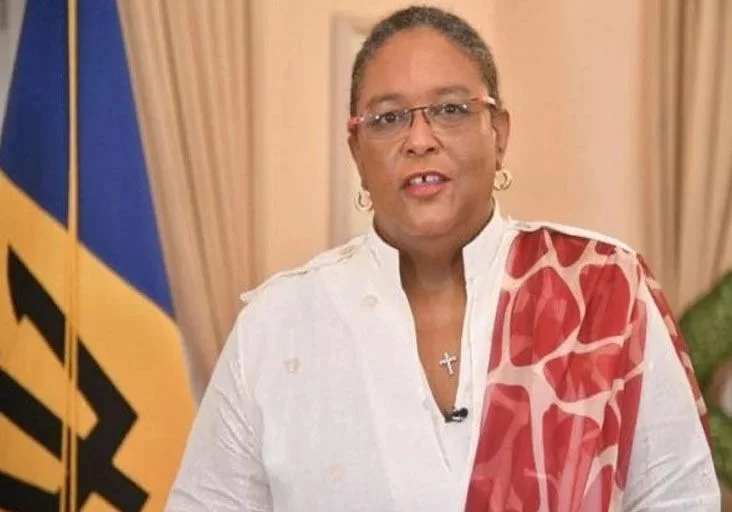
Barbados Prime Minister Mia Amor Mottley has issued a stark warning that her nation is experiencing immediate repercussions from the United States’ military intervention in Venezuela. The escalating situation in Caracas has triggered significant aviation disruptions across the Caribbean region, resulting in canceled flights, stranded passengers, and mounting pressure on the island’s tourism and transportation infrastructure.
Addressing journalists at Ilaro Court, Mottley characterized the preceding 24 hours as ‘extremely challenging,’ noting that her government had to simultaneously manage national security concerns, aviation emergencies, and humanitarian issues amid rapidly evolving developments in Venezuela. The US operation, which reportedly resulted in the capture of President Nicolás Maduro and his wife aboard a naval vessel, prompted immediate security and air traffic alerts throughout the Caribbean, triggering emergency consultations among regional leaders.
Thirteen scheduled flights to Barbados were canceled, affecting thousands of passengers including cruise travelers and customers of JetBlue, Delta, United Airlines, and KLM. The crisis has extended to Bridgetown’s port, where four cruise ships are currently docked with a fifth expected, creating logistical challenges due to limited berthing capacity. The Barbadian government has implemented measures to assist stranded travelers while coordinating with tourism and immigration authorities to manage the situation, though airspace has since reopened.
When questioned about Barbados’ position regarding the developing crisis, Mottley emphasized her country’s commitment to regional coordination through CARICOM and adherence to international law. ‘Let me be very clear: Venezuela is our friend, the United States of America is our friend. The Caribbean Community is the body with which we, as a matter of principle, align our foreign policy,’ the Prime Minister stated. She indicated Barbados would await additional information before taking collective action, refusing to ‘preempt or compromise the integrity of CARICOM’s consultation process.’
Mottley reiterated Barbados’ fundamental foreign policy principle: ‘Our principles are clear: small states can only survive within a rules-based international order. Anything that undermines that causes us grave concern, both in Barbados and throughout the region.’
Other Caribbean nations have expressed serious concerns about the situation. The CARICOM chair condemned the escalation and called for dialogue and peaceful solutions to prevent further regional destabilization. Colombia, which shares a border with Venezuela and hosts significant refugee populations, expressed apprehension about regional implications while emphasizing the importance of stability and security. Trinidad and Tobago, a key transportation hub, reported heightened readiness at airports and ports while expressing solidarity with affected passengers.
The Caribbean has endured years of impacts from the Venezuelan crisis, including migration flows and economic pressures, with these latest developments underscoring the critical need for enhanced regional cooperation.