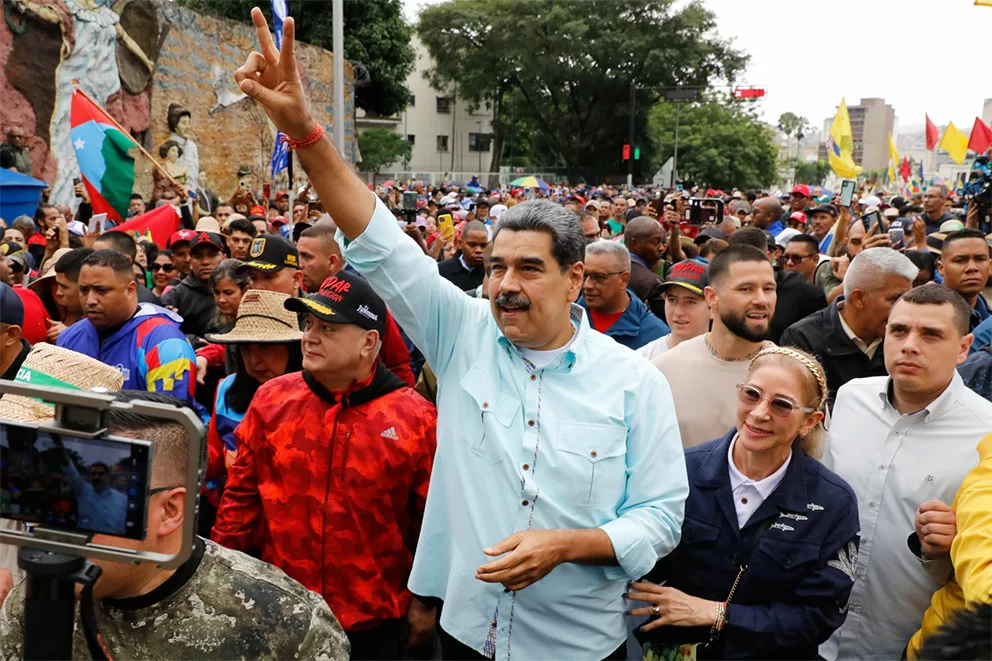
In a dramatic turn of events, Venezuelan President Nicolás Maduro was apprehended during an early morning US military operation in Caracas on Saturday, marking a stunning conclusion to his controversial leadership that witnessed Venezuela’s descent into economic collapse and democratic erosion.
The operation, announced via social media by US President Donald Trump, resulted in Maduro and his wife Cilia Flores being taken into custody. Venezuelan Vice President Delcy Rodríguez confirmed their whereabouts remained unknown shortly after the operation. US Attorney General Pam Bondi stated both would face trial on American soil for serious charges including drug trafficking and corruption.
Maduro’s capture represents the culmination of mounting US pressure across multiple fronts. The Venezuelan leader had spent his final months in power anticipating military intervention aimed at dismantling the socialist revolution initiated by his mentor Hugo Chávez in 1999. Throughout his presidency, Maduro consistently portrayed the United States as Venezuela’s primary antagonist, resisting efforts by both Democratic and Republican administrations to restore democratic norms.
Maduro’s extraordinary political journey began over four decades ago. After receiving ideological training in Cuba in 1986—his only formal education beyond high school—he returned to Caracas as a bus driver for the metro system, quickly rising through union ranks. By the 1990s, intelligence agencies identified him as a left-wing radical with close Cuban ties.
His political ascent accelerated when he joined Chávez’s movement following the latter’s presidential pardon after a failed military coup. Maduro progressed through party ranks, serving six years in parliament before becoming National Assembly president. He additionally held the foreign ministry portfolio for six years and briefly served as vice president.
Chávez formally anointed Maduro as his political heir during his final address before dying in 2013. Though the choice surprised many, Chávez’s substantial electoral capital secured Maduro a narrow victory and his first term. However, he never achieved his predecessor’s popularity levels.
Maduro’s presidency became characterized by profound socio-political and economic crisis. Millions were plunged into poverty, over 7.7 million Venezuelans fled the country, and thousands of government opponents faced imprisonment and frequent torture—sometimes allegedly ordered by Maduro himself. Critical voices were systematically purged from state institutions.
The crisis erupted during his first year with protests resulting in 43 deaths and numerous arrests. In 2015, Maduro’s party lost parliamentary control after sixteen years, prompting him to establish a pro-government constituent assembly in 2017 to sideline opposition. This triggered months of protests with over 100 fatalities and thousands injured. Maduro survived an assassination attempt involving explosives detonated during a military parade in 2018.
The US-led capture operation signifies the lowest point of Maduro’s rule, forming part of broader American strategy to end socialist governance and reestablish influence in Venezuela. The arrest has provoked strong global reactions, with US allies applauding the action while other nations warn against escalation and emphasize peaceful, lawful transition needs.
Regional countries are closely monitoring developments given the ongoing humanitarian crisis and refugee flows. Venezuela’s political and economic situation remains extremely fragile, with recovery expected to require years amid significant stability and security challenges. The international community now faces the complex task of facilitating Venezuela’s transition toward democratic and economic recovery while respecting human rights and sovereignty.