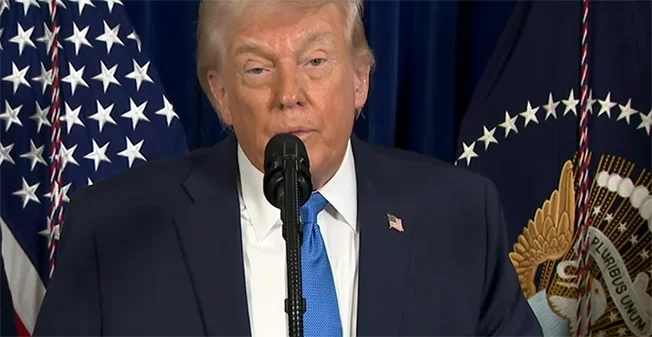
The escalating crisis in Venezuela represents not an isolated incident but the most visible manifestation of a comprehensive geopolitical repositioning by the United States across the Western Hemisphere. This strategic shift, formalized in the December 2025 National Security Strategy under the ‘America First’ doctrine, demonstrates a calculated integration of energy interests, governance influence, and regional power projection.
Venezuela has transitioned from sovereign nation to geopolitical testing ground following a unilateral US military intervention that resulted in the capture and extradition of President Nicolás Maduro and his wife to New York. Conducted without Congressional authorization or UN Security Council mandate, the operation has drawn international condemnation while revealing Washington’s broader ambitions. President Donald Trump has explicitly stated that military action constitutes merely the initial phase, with plans for direct involvement in Venezuela’s governance and development of its oil resources by American corporations—effectively establishing elements of externally imposed administration.
International legal experts warn these actions violate fundamental principles of the UN Charter regarding prohibitions on force, non-interference in domestic affairs, and self-determination rights.
Venezuela’s strategic significance stems from possessing the world’s largest proven reserves of heavy crude oil—a resource particularly suited to US refinery infrastructure despite years of sanctions and economic decline. This explains why American discourse encompasses not merely resource extraction but complete governance restructuring, positioning Venezuela as a demonstration case for how far the US will go to secure strategic energy interests.
Neighboring Guyana exemplifies alternative approach within the same framework. As the world’s fastest-growing oil producer—approaching one million barrels daily under predominantly US corporate leadership—Guyana maintains formal sovereignty while becoming deeply integrated into American economic and security arrangements. Though Venezuelan claims over oil-rich Essequibo remain unresolved, Washington views Guyana as proof that energy development can occur within its strategic framework without overt confrontation.
Suriname emerges as the next strategic focal point, poised to commence large-scale offshore oil production within the same geographic corridor. Recent replacement of the US ambassador to Suriname—part of broader diplomatic reshuffling affecting 29 nations—signals heightened American interest in the country’s future direction, with embassies increasingly functioning as strategic hubs connecting economic, security, and political interests.
Regional bodies including the Organization of American States (OAS) and Caribbean Community (CARICOM), alongside Surinamese President Jennifer Simons, advocate counterbalancing power politics with normative frameworks emphasizing de-escalation, international law, constitutional order, and regional stability. For smaller nations, this represents not merely diplomatic rhetoric but essential self-protection in an era where resources increasingly drive geopolitical maneuvers.
The Venezuela crisis demonstrates that energy has transcended economic status to become geopolitical currency attracting influence that seeks administrative control. Resource-rich nations consequently face heightened vulnerability when institutions, oversight mechanisms, and regional solidarity remain underdeveloped. As Suriname contemplates its oil future, it must consider not merely production partnerships but institutional strengthening to preserve governance autonomy amid great power competition.