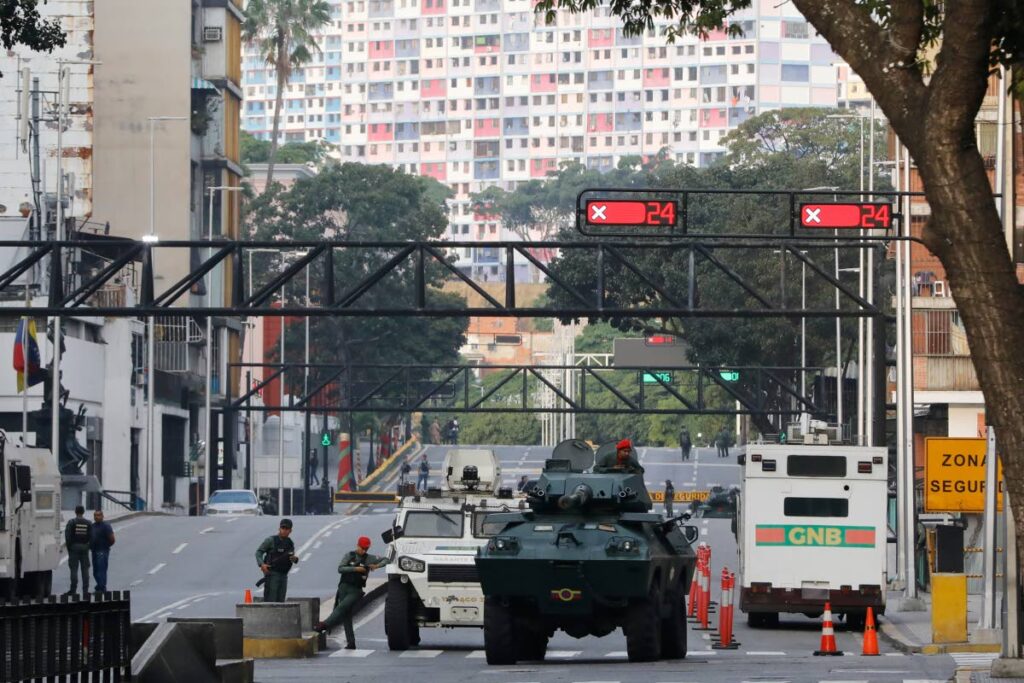
In a dramatic escalation of tensions, United States military forces initiated a covert operation in Venezuela during the early hours of Saturday, resulting in the capture of President Nicolás Maduro. The intervention began with precision airstrikes targeting key Venezuelan military installations including La Guaira port, Higuerote airport, La Cariota airport, and the Fuerte Tiuna military complex. Notably, the country’s critical oil infrastructure remained untouched throughout the operation.
Eyewitnesses reported explosions illuminating the night sky over Caracas as military helicopters patrolled the capital. The strategic strikes appear to have served as a diversion for the primary objective: the extraction and detention of President Maduro, who was transported with his wife, Cilia Flores, to the USS Iwo Jima naval vessel.
The operation culminates years of mounting pressure on Maduro’s administration, which faced indictment by U.S. authorities in 2020 on multiple charges including corruption and drug trafficking. The State Department had previously offered a $50 million reward for information leading to his arrest or conviction.
Following the military incursion, Attorney General Pam Bondi declared that Maduro would face ‘American justice on American soil in American courts.’ With Maduro’s capture, constitutional power has transferred to Vice President Delcy Rodríguez, who was swiftly sworn in as interim leader.
The action represents a significant evolution from previous U.S. military interventions in the region, notably the 1989 Operation Just Cause in Panama which required several days to capture General Manuel Noriega. That operation drew widespread international condemnation and resulted in substantial civilian casualties.
This intervention occurs against the backdrop of a newly articulated ‘Trump Corollary’ to the Monroe Doctrine, which advances a doctrine of American preeminence and flexible realism as pillars of foreign policy. During a recent press conference, President Trump explicitly connected the operation to Venezuela’s substantial oil reserves, suggesting the newly installed leadership would cooperate with U.S. economic interests.