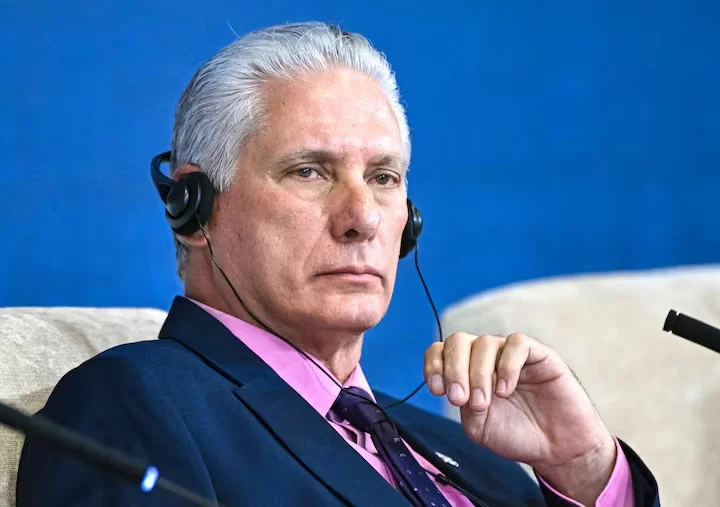
Cuban President Miguel Díaz-Canel has issued a forceful condemnation of United States military operations in Venezuela, characterizing the actions as acts of “state terrorism” during a mass demonstration outside the U.S. Embassy in Havana. The address came in response to recent U.S. operations that resulted in the detention of Venezuelan leadership.
Addressing thousands of assembled citizens, Díaz-Canel asserted that the military aggression represents ‘a shocking violation of international law norms’ directed against ‘a peaceful nation that poses no threat to the United States.’ The condemnation highlights escalating tensions in Caribbean geopolitical relations.
The development carries significant economic implications for Cuba, which depends on Venezuela for approximately 30% of its already constrained oil imports. This energy partnership has been maintained through an exchange program that stations thousands of Cuban medical professionals within the South American nation.
Energy analysts warn that disruption to Venezuelan oil supplies could deliver a catastrophic blow to Cuba’s fragile electrical grid and energy infrastructure. Simultaneously, thousands of Cuban families expressed concern about relatives working in Venezuela, though the Cuban Health Ministry stated via Twitter that these personnel remain ‘well protected.’
In a contrasting statement to the New York Post, U.S. President Donald Trump indicated no plans for additional military action against Cuba, stating: ‘No, Cuba will fall on its own. Cuba is doing very poorly.’ Trump further emphasized Cuba’s historical dependence on Venezuelan support, suggesting this relationship ‘didn’t work out too well in this case.’
The diplomatic confrontation unfolds against Cuba’s severe six-year economic crisis, which officials report has triggered at least a 15% economic contraction. The nation continues to grapple with critical shortages of basic goods, hyperinflation, collapsing public services, and widespread power outages. Cuban authorities attribute these challenges primarily to intensified U.S. sanctions implemented during the Trump administration, which compounded the decades-long comprehensive trade embargo.