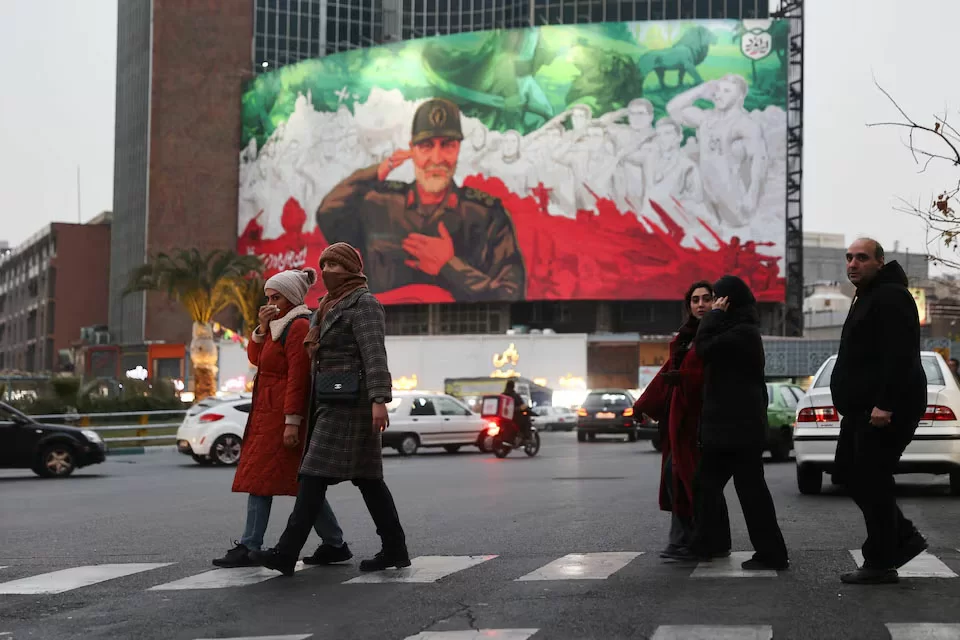
Amid escalating civil unrest in Iran, U.S. President Donald Trump issued a stark warning on Friday, threatening to support Iranian protesters if security forces employ violence against them. This declaration comes as Iran faces its most severe domestic crisis in years, with widespread demonstrations against soaring inflation and economic hardship resulting in multiple casualties.
“We stand ready and are fully prepared,” Trump declared via social media, echoing his administration’s previous military actions against Iranian nuclear facilities earlier this year in coordination with Israeli airstrikes targeting Tehran’s atomic program and military leadership.
Iran’s influential senior official Ali Larijani swiftly condemned Trump’s statements, warning that American interference in Iran’s internal affairs jeopardizes Middle Eastern stability. The Iranian regime, which supports various proxy groups across Lebanon, Iraq, and Yemen, responded through its UN Ambassador Amir-Saeid Iravani, who formally requested condemnation of Trump’s remarks from the United Nations Secretary-General and Security Council president.
Current protests, while smaller than the massive 2022 demonstrations that paralyzed the nation, have spread nationwide with particular intensity in western provinces. State media and human rights organizations report at least ten fatalities since Wednesday, including one paramilitary Basij militia member. A local official in western Iran warned through state media that any unauthorized protest would be dealt with “decisively and without mercy.”
The clerical establishment has historically suppressed dissent through mass arrests and severe security measures, though the current economic crisis has rendered the government increasingly vulnerable. The situation represents the most significant challenge to Iranian authorities since the 2022 protests triggered by the death of a young woman in custody, which resulted in hundreds of casualties.
Trump provided no specific details regarding potential American support for protesters, though Washington has maintained severe sanctions against Tehran since Trump withdrew from the nuclear deal in 2018 and initiated a ‘maximum pressure’ campaign.
The timing of Trump’s threat follows his meeting with Israeli Prime Minister Benjamin Netanyahu, known for his hardline stance against Iran. U.S. and Israeli airstrikes in June 2025 further increased pressure on Iranian authorities amid regional conflicts including the Syrian civil war and tensions with Hezbollah in Lebanon.
Domestically, Iran’s elected President Masoud Pezeshkian has adopted a more conciliatory tone, promising dialogue with protest leaders regarding living costs despite reports of security forces using tear gas and live ammunition against demonstrators. Iran’s persistent economic troubles, exacerbated by international sanctions, have created regular social unrest with high inflation diminishing purchasing power.
The historical tensions between Iran and the United States, deepened by regional conflicts and Iran’s nuclear program, continue to present challenges for international diplomacy. The involvement of Iranian-backed proxy groups adds geopolitical complexity to the situation, creating potential for escalations with significant implications for regional and global security.