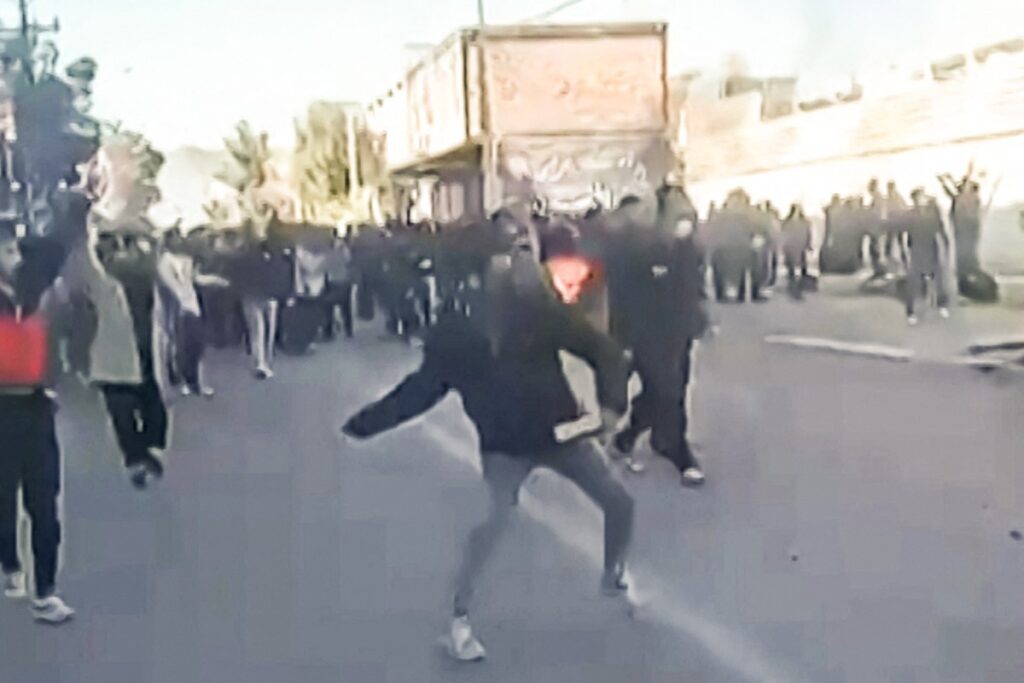
PARIS, France (AFP)—A dangerous diplomatic confrontation escalated between the United States and Iran on Friday after President Donald Trump threatened military intervention if Iranian security forces violently suppressed peaceful protesters. The warning prompted immediate and severe pushback from Tehran, which declared any foreign interference would destabilize the entire region and jeopardize American interests.
The exchange marks a significant hardening of rhetoric as Iran grapples with widespread civil unrest. The protests, initially triggered by shopkeepers striking in Tehran over soaring prices and a crippled economy, have now spread to numerous cities. Clashes between demonstrators and security forces on Thursday resulted in at least six fatalities, the first confirmed deaths since the movement gained momentum.
Utilizing his Truth Social platform, President Trump issued a direct threat to the Iranian government. He stated that should Iran resort to its ‘custom’ of violently killing peaceful demonstrators, the United States would ‘come to their rescue,’ emphatically adding that the nation was ‘locked and loaded and ready to go.’
The response from Iranian officials was swift and severe. Foreign Minister Abbas Araghchi condemned Trump’s statement as ‘reckless and dangerous,’ confirming that the nation’s armed forces were ‘on standby.’ Ali Larijani, head of Iran’s top security body, issued a stark warning that U.S. involvement in what he termed an ‘internal matter’ would lead to regional destabilization and the destruction of American assets, cautioning the American public to ‘be mindful of their soldiers’ safety.’
Further amplifying the gravity of the situation, Ali Shamkhani, a key adviser to Supreme Leader Ayatollah Ali Khamenei, stated that any U.S. intervention would be met with a decisive response, identifying national security as an absolute ‘red line.’
Interestingly, Iranian leadership, including President Masoud Pezeshkian, has recently sought to legitimize the economic grievances driving the protests. Acknowledging the nation’s profound economic despair—fueled by years of crushing international sanctions over its nuclear program—Pezeshkian even stated from a religious perspective that failure to address public hardship would damn his government to hell.
However, this acknowledgment exists alongside promises of a firm official response to any instability. Iranian authorities, including a national police spokesman, have drawn a clear distinction between legitimate public dissent and what they label ‘destructive actions’ orchestrated by enemies seeking to create chaos. Judicial officials have warned that participation in illegal gatherings or actions disturbing public order will be treated with the ‘greatest firmness.’
The international community has begun to react. The UN human rights chief urged Iranian authorities to respect freedoms of expression and peaceful assembly. Meanwhile, Venezuela, itself in a protracted crisis with the U.S., expressed solidarity with Iran and condemned Trump’s ‘confrontational’ rhetoric, calling for an end to interventionist policies.
This new wave of civil discontent emerges as Iran contends with significant strategic setbacks for its allies across the Middle East in Gaza, Lebanon, and Syria, following a recent 12-day conflict with Israel that saw limited U.S. military involvement. While current demonstrations are assessed to be smaller in scale than the major 2022 uprising sparked by the death of Mahsa Amini, they represent a persistent challenge to the regime’s authority amid intense economic pressure.