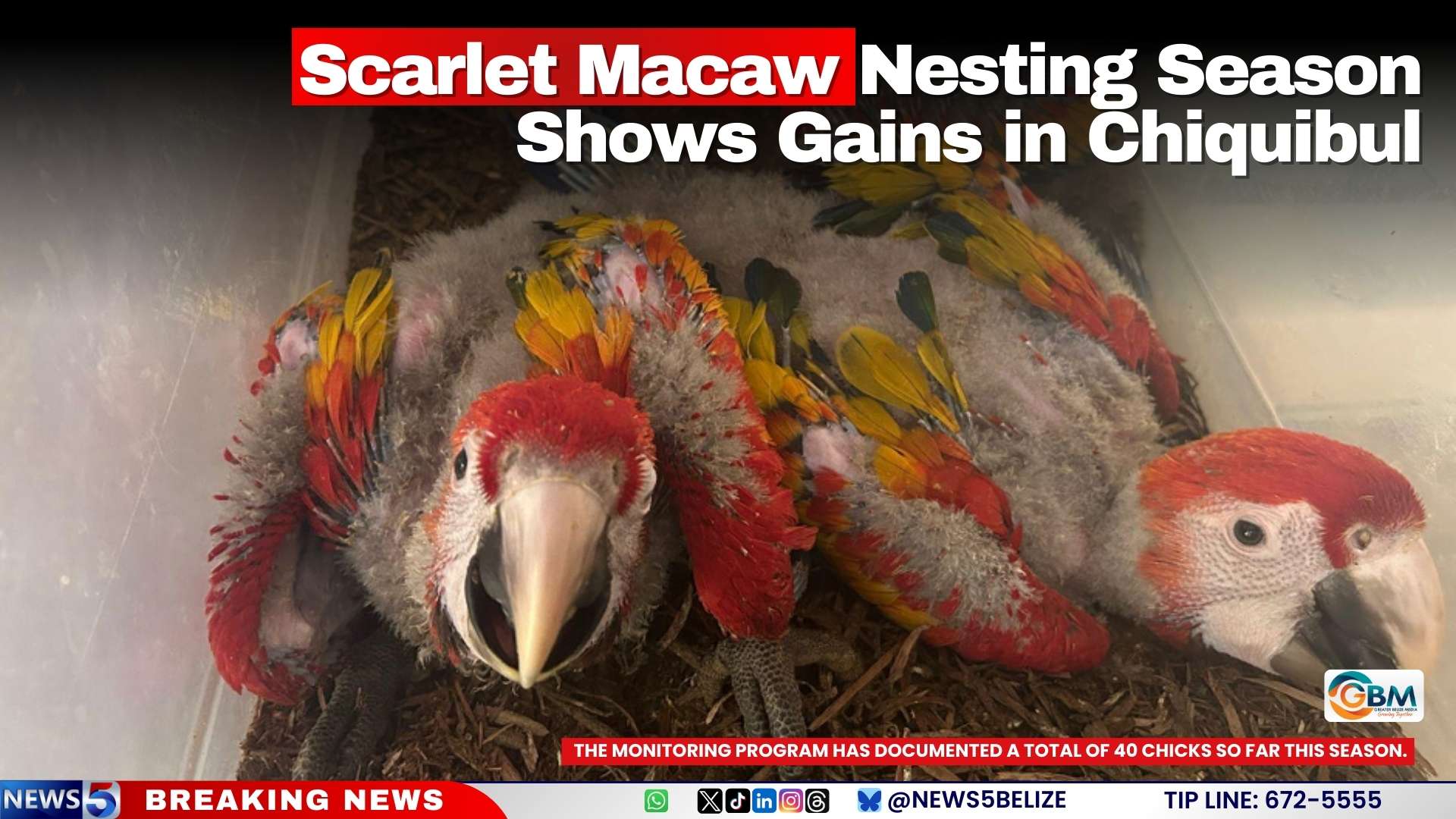
Conservation efforts for Belize’s critically endangered Scarlet Macaw population are demonstrating significant progress during the 2025 nesting season, according to mid-season assessments from the Chiquibul ecosystem. The subspecies Ara macao cyanoptera, unique to Belize and classified as endangered, faces persistent threats from habitat destruction and human development pressures despite the broader species’ ‘Least Concern’ global status.
The current conservation initiative, spearheaded by Friends for Conservation and Development since 2011, focuses on comprehensive monitoring and anti-poaching operations across the macaw’s primary habitat in the Chiquibul and Maya Mountain Massif regions. These areas, particularly the riparian corridors of the Upper Macal River and its tributaries, provide essential dry-season feeding grounds for the estimated national population of 300-350 birds.
As of June 15, 2025, conservation teams have documented 23 active nests with encouraging reproductive metrics. From 70 eggs laid this season, 42 have successfully hatched (60% success rate), while 16 failed due to infertility or embryonic issues. Only six eggs were lost to predation, with another six remaining under incubation. The program has recorded 40 chicks total, with 26 thriving in natural nests and 14 receiving care at Las Cuevas research facilities.
Conservationists are implementing targeted strategies to address the 8.57% predation rate while investigating how nest location, environmental factors, and parental behavior influence reproductive success. These ongoing efforts represent a crucial advancement in preserving Belize’s distinctive biodiversity and offer hope for the Scarlet Macaw’s long-term recovery.