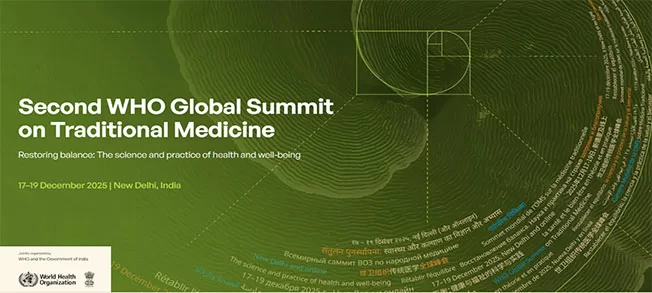
Suriname has reinforced its commitment to incorporating traditional and complementary medicine into its national healthcare framework following participation in the World Health Organization’s second global summit on traditional medicine. The high-level gathering, convened in New Delhi, India, assembled delegates from over one hundred nations to advance the implementation of the WHO Traditional Medicine Strategy 2025–2034.
The conference culminated in the adoption of the Delhi Declaration, which formally recognizes traditional medicine as both a shared bio-cultural heritage and an integral component of national health systems worldwide. This landmark document emphasizes evidence-based integration, rigorous regulatory standards, patient safety protocols, and meaningful engagement with indigenous communities and traditional knowledge holders.
Suriname’s multidisciplinary delegation included officials from the Ministry of Health, Welfare and Labor, the Ministry of Foreign Affairs, International Trade and Cooperation, and the National Assembly. The nation used the platform to reaffirm its phased, responsible approach to integrating traditional, complementary, and integrative medicine within its healthcare architecture.
On the sidelines of the summit, Surinamese representatives engaged in bilateral discussions with Indian counterparts to explore enhanced cooperation in traditional medicine. India has expressed willingness to provide technical support in regulatory development, capacity building, and knowledge exchange, with particular attention to Suriname’s multicultural demographic landscape.
This participation signals accelerated parliamentary consideration of Suriname’s draft legislation on the Regulation and Development of Traditional and Integrative Medical Systems Industry. The move aligns with broader policy initiatives aimed at ensuring safe, regulated, and inclusive application of traditional medical practices across the nation’s diverse population.