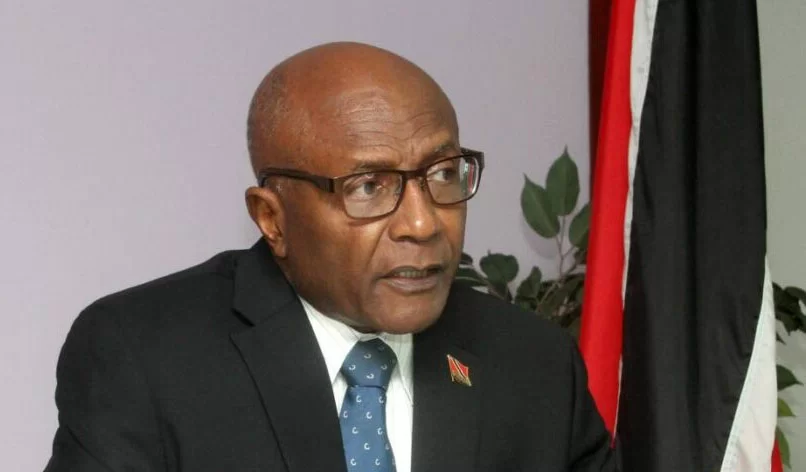
Rodney Charles, former United National Congress parliamentarian and Trinidad and Tobago’s ex-ambassador to the United Nations, has issued a stern warning to his government regarding its support for US military operations in the southern Caribbean region. Through a detailed Facebook post on December 20, the seasoned diplomat expressed profound concerns about the implications of this security cooperation and the broader foreign policy direction of Trinidad and Tobago.
Charles, who served as UN ambassador from May 2010 to September 2015 under Prime Minister Kamla Persad-Bissessar’s first administration and subsequently as shadow minister for Foreign Affairs and CARICOM matters until April 2025, emphasized that his critique stems from strategic considerations rather than anti-American sentiment. He referenced his personal connections with the United States, including White House and State Department internships, and family members serving in the US military. “I am not anti-American. I still believe in the spirit and intent of the American Constitution. It’s just that I love Trinidad and Tobago more,” Charles stated.
The former politician articulated deep concerns about what he perceives as a lack of sophisticated, nuanced foreign policy strategy serving the nation’s long-term interests. He cautioned that Trinidad and Tobago risks embarking on a dangerous path by aligning too closely with unpredictable US military strategies, particularly given potential power shifts following the November 2026 US midterm elections.
This warning emerges amid recent developments: the Trinidadian government authorized temporary use of Piarco and Tobago airports by US military aircraft for logistical purposes in early December 2025. Additionally, Prime Minister Persad-Bissessar confirmed in late November that US Marines are actively working on Tobago, primarily enhancing airport infrastructure. Critics view these measures as steps toward regional militarization.
Charles warned that this close cooperation with the US, coupled with insufficient regional consultation, could exacerbate tensions within CARICOM. He pointed to public disagreements between Prime Minister Persad-Bissessar and other CARICOM leaders regarding the Caribbean as a zone of peace and condemnation of US military presence. According to Charles, this dynamic could undermine trust within the Caribbean community and potentially lead to new forms of economic domination by former colonial powers perceiving the region as divided and vulnerable.
The diplomat also highlighted the growing isolation of nations like Antigua and Barbuda and Dominica, alongside negative travel advisories affecting Barbados, Grenada, and Saint Lucia—measures that could damage tourism-dependent economies. Simultaneously, he warned of latent anti-American sentiment spreading across Latin American nations including Mexico, Colombia, and Brazil, partly fueled by recent US policies and rhetoric toward Venezuela.
Charles further referenced the resurgence of the Monroe Doctrine under US President Donald Trump through the 2025 National Security Strategy document, which outlines plans to mobilize global allies in support of US policy objectives. He emphasized that Trinidad and Tobago’s current foreign policy rests on three precarious assumptions: the perpetual dominance of Trumpism in US politics, anticipated regime changes in Venezuela, and the expectation that future Venezuelan leaders would abandon nationalist convictions.
These developments and Charles’ warnings illustrate the complex geopolitical landscape where national interests, regional cooperation, and international power dynamics intersect. The former ambassador calls for a comprehensive reevaluation of foreign policy approaches, advocating for strategies that better serve the long-term interests of both Trinidad and Tobago and the broader Caribbean region.