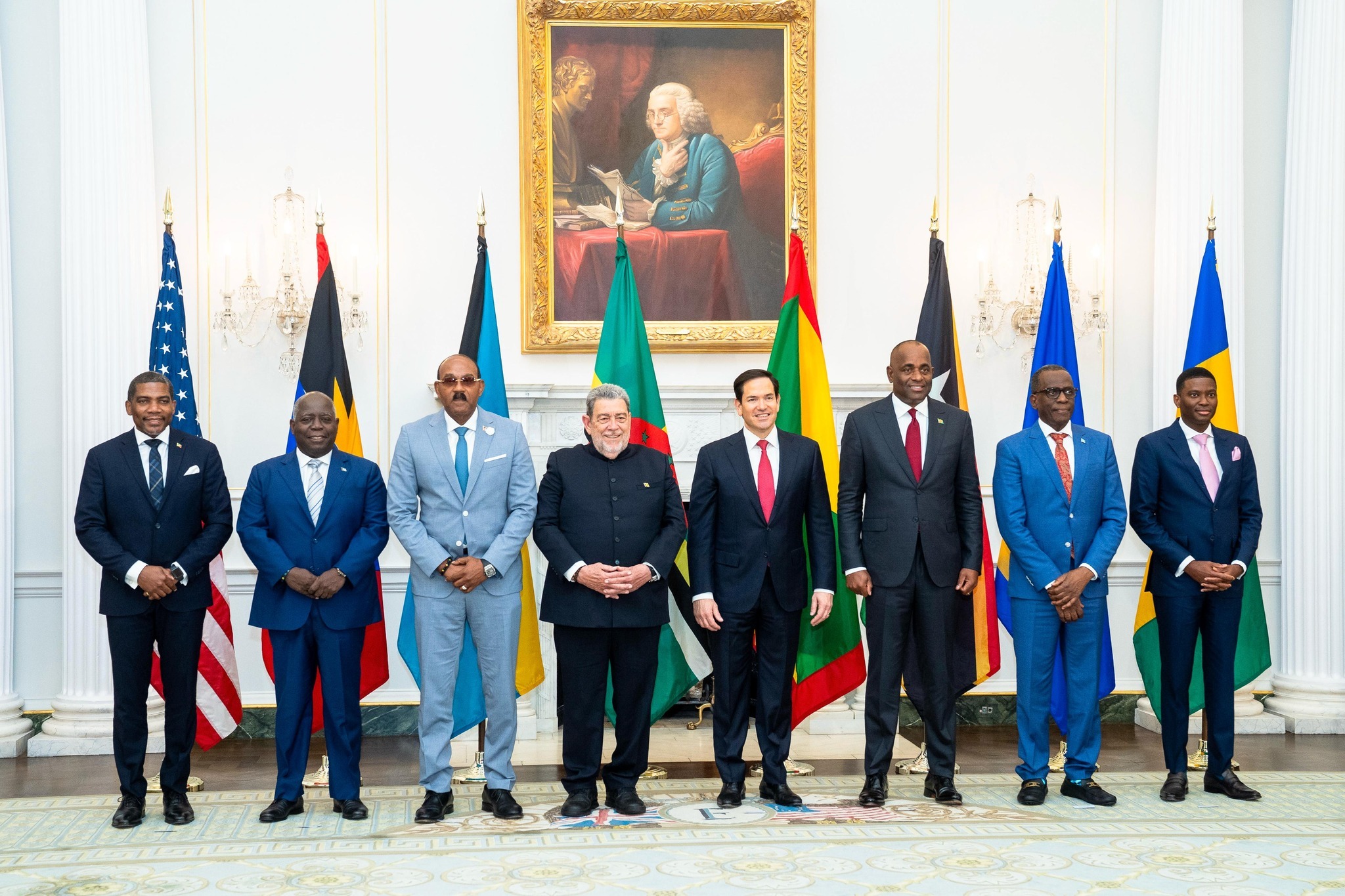
The Trump Administration has initiated a profound transformation in US-Caribbean relations, placing Saint Lucia and the CARICOM bloc under unprecedented strategic scrutiny. This geopolitical shift represents the most significant reorientation of American foreign policy toward the region in decades, marked by a more assertive posture that prioritizes bilateral engagement over multilateral frameworks.
The cornerstone of this transformation is the 2025 National Security Strategy (NSS), which dramatically elevates Latin America and the Caribbean to the status of ‘Very High’ strategic importance—the top global priority for Washington. This represents a stark departure from previous administrations that consistently ranked the region as having low to moderate significance throughout the post-Cold War era.
This strategic recalibration manifests through concrete policy changes. The administration has imposed visa restrictions on citizens of Antigua and Barbuda and Dominica, signaling a willingness to leverage travel access as a diplomatic tool. Simultaneously, Washington has abandoned the non-reciprocal trade preferences established under the Caribbean Basin Economic Recovery Act, implementing instead a bilateral tariff regime that treats CARICOM states individually rather than collectively.
The NSS explicitly frames the Caribbean as a privileged sphere of US interest, aiming to prevent strategic competitors—particularly China, Russia, Iran, Cuba, and Venezuela—from establishing dominant positions in the region. This modern interpretation of the Monroe Doctrine, termed the ‘Trump Corollary,’ asserts America’s right to maintain hemispheric primacy through unilateral action when necessary.
For Saint Lucia, the implications are multifaceted and profound. The nation’s Citizenship by Investment Program faces heightened scrutiny over potential homeland security concerns. Foreign policy alignment, especially regarding relationships with Venezuela and China, will attract increased Washington attention. Additionally, the region faces potential economic consequences through possible travel advisories, expanded visa restrictions, and maritime enforcement actions that could impact tourism and investment flows.
The fundamental challenge for CARICOM lies in Washington’s deliberate shift toward bilateralism, which undermines the bloc’s collective bargaining power and ability to advance regional interests cohesively. With the United States reengaging the Caribbean on its own terms, Saint Lucia and its neighbors must develop strategic responses that preserve sovereignty while navigating renewed great power attention.