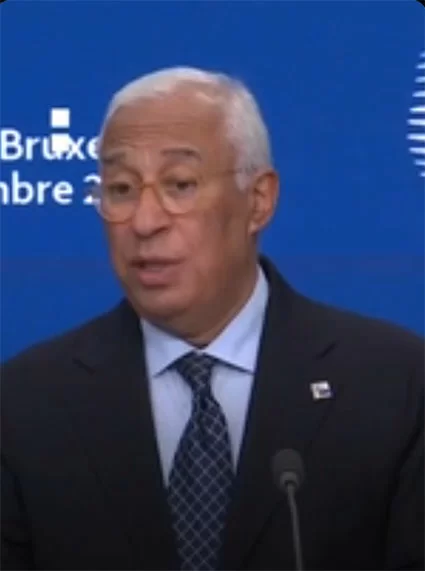
European Union leaders reached a landmark agreement Friday to provide Ukraine with a massive €90 billion ($106 billion) interest-free loan to address the country’s military and economic needs through 2027. The decision came after marathon negotiations that exposed deep divisions within the bloc regarding the use of frozen Russian assets.
The agreement, announced by EU Council President António Costa via social media, represents a critical financial lifeline for Ukraine as it approaches potential bankruptcy by spring 2025. The International Monetary Fund estimates Ukraine will require €137 billion ($161 billion) during 2026-2027 to sustain its defense efforts and maintain government operations.
Originally, EU officials had contemplated utilizing approximately €210 billion ($246 billion) in Russian central bank assets frozen primarily in Belgium. However, this proposal encountered staunch opposition from Belgian Prime Minister Bart De Wever, who characterized the plan as legally precarious and potentially damaging to Euroclear, the Brussels-based financial clearinghouse holding €193 billion ($226 billion) in frozen Russian funds.
The negotiations stretched late into Thursday night as leaders attempted to reassure Belgium about protection from Russian retaliation. When talks reached an impasse, the EU ultimately opted to raise the funds through capital markets rather than risk setting what De Wever described as a “dangerous global precedent for legal certainty.”
Hungary, Slovakia, and Czech Republic opposed the aid package but ultimately agreed not to block it in exchange for financial protection guarantees. Hungarian Prime Minister Viktor Orbán, who maintains close ties with Russian President Vladimir Putin, declared that “giving money means war” and dismissed the rejected asset-seizure plan as a “dead end.”
French President Emmanuel Macron praised the agreement as a “significant step forward,” while German Chancellor Friedrich Merz confirmed that the frozen Russian assets would remain blocked until Russia pays war reparations to Ukraine—estimated by President Volodymyr Zelenskyy at over €600 billion ($700 billion). Merz emphasized that the EU reserves the right to utilize immobilized Russian funds for loan repayment if Russia fails to provide compensation.
The decision came amid intense protests by European farmers angry about a proposed trade deal with South American nations, creating a tumultuous backdrop for the Brussels summit that Ukrainian President Zelenskyy attended to personally advocate for urgent financial support.