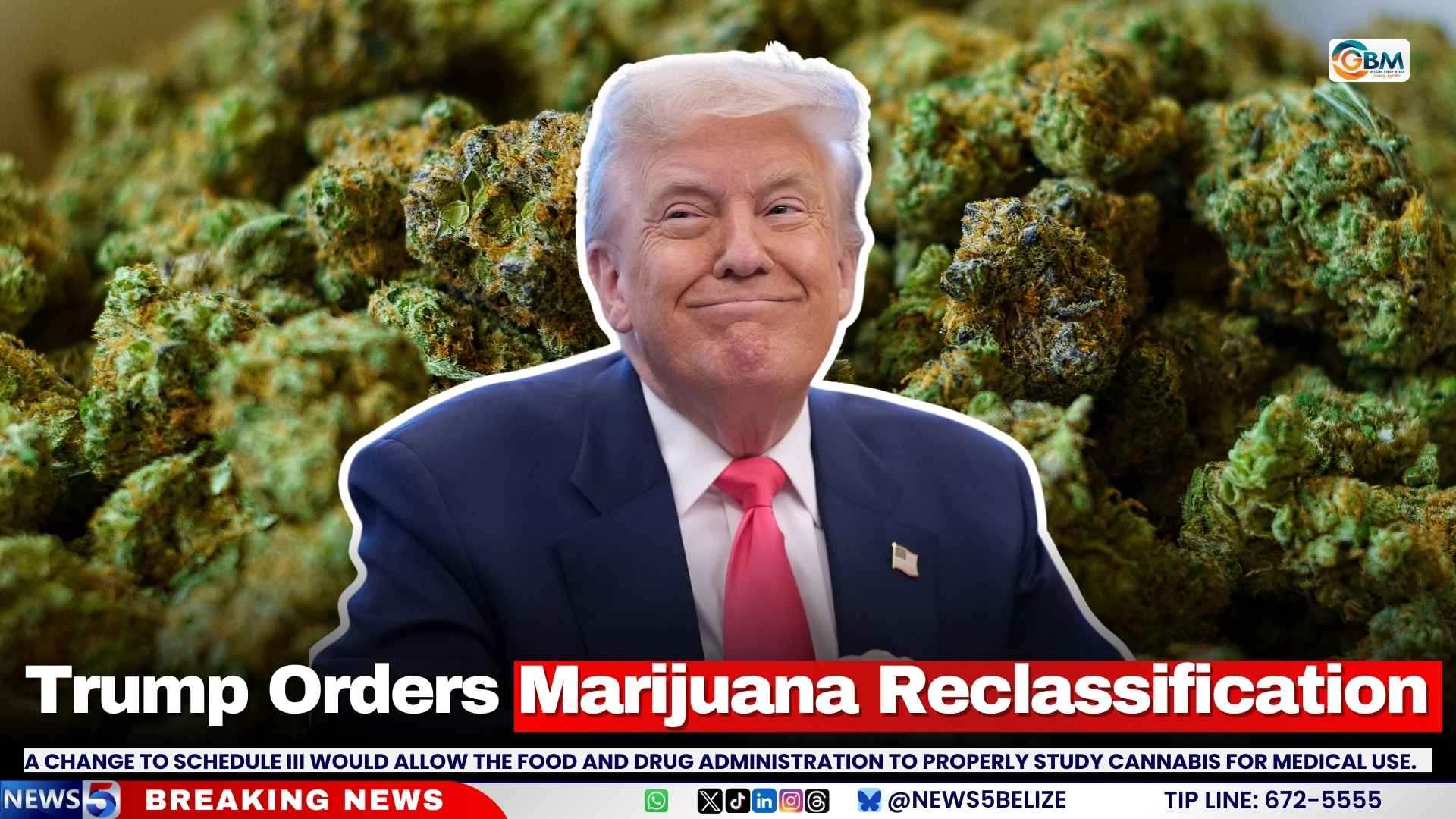
In a landmark move on December 19, 2025, President Donald Trump enacted a significant shift in U.S. drug policy by signing an executive order to accelerate the reclassification of marijuana at the federal level. The directive mandates the removal of cannabis from its current status as a Schedule I substance—a category reserved for drugs deemed to have no medical value and high abuse potential, such as heroin and LSD—and transitions it to Schedule III.
Schedule III classification acknowledges recognized medical applications and a lower potential for dependency than Schedules I and II. This category includes pharmaceuticals like ketamine and Tylenol with codeine. From the Oval Office, President Trump framed the decision as a matter of “common sense,” emphasizing its aim to aid individuals suffering from chronic pain while explicitly ruling out the legalization of recreational use.
“This action in no way legalizes marijuana in any form,” Trump stated. “My position is clear: unless a medical professional recommends it for a legitimate health reason, you should not use it.”
The executive order specifically tasks Attorney General Pam Bondi with overseeing the completion of the rescheduling process and issuing a final ruling. This administrative change would empower the Food and Drug Administration (FDA) to conduct comprehensive research into the medicinal properties and potential applications of cannabis, a process heavily restricted under the previous classification.
The policy shift aligns with evolving public opinion. A recent Gallup poll from November, cited by NBC News, indicates that 64% of Americans now support the full legalization of marijuana, highlighting a significant cultural and political trend that the administration’s action appears to partially address.