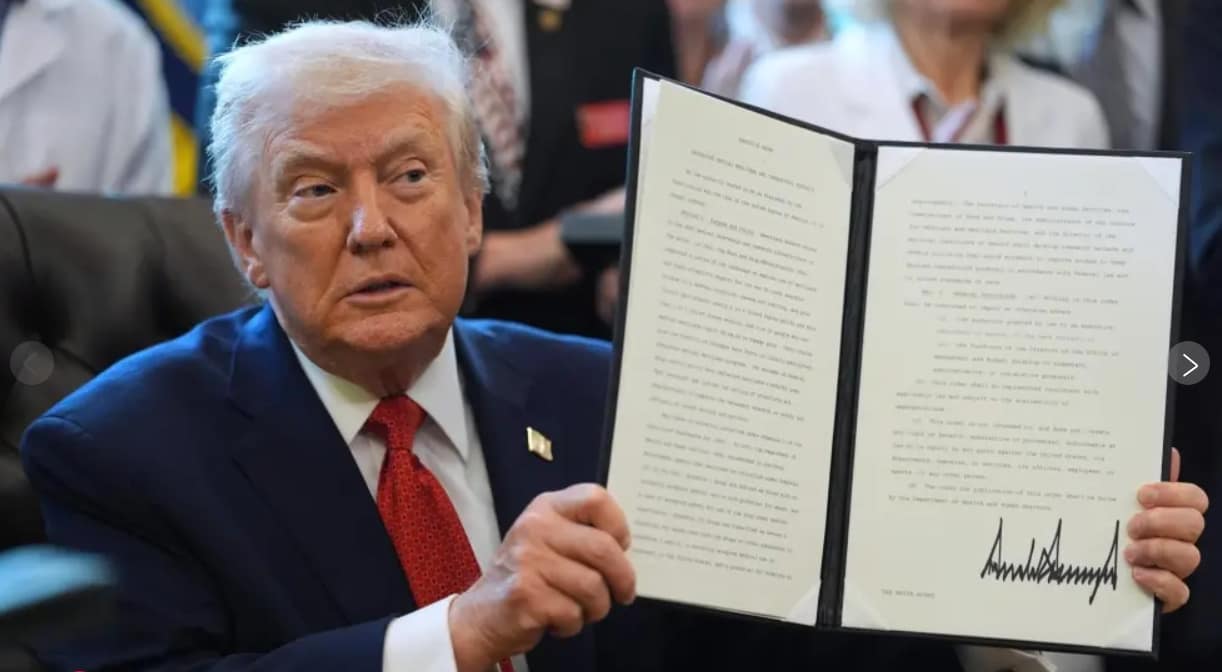
In a landmark move that signals a significant transformation in U.S. drug policy, President Donald Trump enacted an executive order on Thursday directing the potential reclassification of marijuana from its current status as a Schedule I substance to the less restrictive Schedule III category. This administrative action represents the most substantial federal cannabis policy reform in decades and aligns federal approaches more closely with policies already implemented by 40 states and Washington, D.C.
The executive order mandates the Drug Enforcement Administration (DEA) to expedite the rescheduling process, which would relocate cannabis from its current classification alongside heroin and LSD to Schedule III, placing it in the same category as ketamine and certain anabolic steroids. While this change would not establish nationwide recreational legalization, it would fundamentally alter the regulatory landscape for the cannabis industry and substantially reduce the crippling tax burdens that have hampered legitimate marijuana businesses.
President Trump emphasized the medical imperative behind his decision, stating he had received overwhelming public support for the policy shift. ‘We have people begging for me to do this. People that are in great pain,’ the President remarked during the signing ceremony. The order additionally calls for expanded research into and access to CBD products, including a proposed Medicare pilot program that would provide senior citizens with doctor-recommended, hemp-derived CBD at no cost.
Despite growing public support for cannabis reform—with Gallup polling indicating 64% of Americans now favor legalization—the policy change faces significant opposition from within the President’s own party. More than twenty Republican senators, including several staunch Trump allies, signed a letter earlier this year urging the administration to maintain marijuana’s Schedule I status, arguing that rescheduling would undermine public safety and potentially benefit foreign adversaries like China.
The complex rescheduling process, which typically involves extensive scientific review and public comment periods, had already been initiated under the previous administration but encountered substantial resistance within the DEA. Trump’s order directs agencies to complete the procedure as rapidly as legally permissible, though no specific timeline has been established.
Critics from both sides of the debate have emerged. Law enforcement veterans expressed concern about perceived contradictions in simultaneously escalating the war against drugs like fentanyl while relaxing marijuana restrictions. Meanwhile, cannabis advocacy organizations have indicated they may pursue legal action if the rescheduling proceeds, arguing that the government should pursue full decriminalization rather than partial reform.
The Department of Health and Human Services has documented approximately 30,000 licensed healthcare practitioners currently authorized to recommend medical marijuana to over six million patients across at least fifteen medical conditions. The Food and Drug Administration has acknowledged credible scientific support for cannabis in treating anorexia-related conditions, nausea, vomiting, and chronic pain—particularly among older adults, one-third of whom suffer from persistent pain conditions.