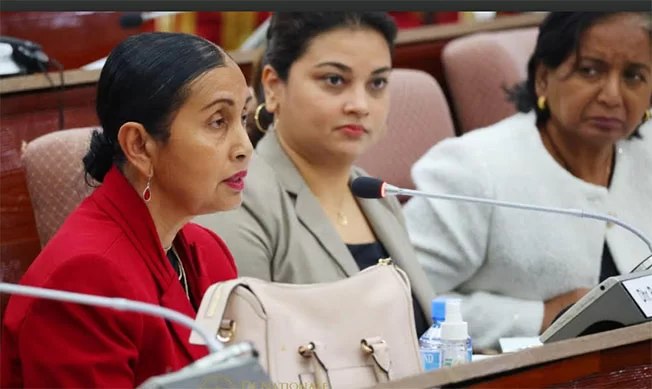
Suriname’s National Assembly witnessed a dramatic clash of perspectives on Thursday as Attorney General Garcia Paragsingh delivered stern criticism of proposed judicial reforms while Court President Iwan Rasoelbaks advocated for cautious implementation with clear preconditions.
The contentious legislation, aimed at fundamentally restructuring the judicial system, faced its most vigorous opposition from Paragsingh during hearings before the parliamentary committee preparing the bills for public debate. The Attorney General expressed particular concern about proposals to establish a college of attorneys general, questioning whether the initiative adequately identified specific problems it intended to solve.
Paragsingh emphasized that any comprehensive restructuring must first clearly define deficiencies within the current prosecution framework. She argued that the existing system has proven its practical value, with no compelling evidence demonstrating the necessity for its replacement by a college of two to four attorneys general. The prosecutor further warned that such a model raises serious questions about appointment procedures, internal relationships, and most critically, the potential compromise of the Public Prosecutor’s Office independence.
Drawing comparative analysis, Paragsingh referenced the Netherlands’ college system but emphasized fundamental contextual differences. While the Netherlands operates multiple prosecutor’s offices, courts, and appellate courts on a much larger scale, Suriname maintains only one prosecutor’s office with relatively limited organizational capacity, making direct implementation of the Dutch model impractical.
The Attorney General also addressed case delay concerns, asserting that prosecution apparatus cannot be held responsible for courtroom delays once cases reach trial stages. She identified capacity constraints and expertise shortages within investigative services, coupled with practical resource limitations, as primary causes for pretrial delays. Paragsingh advocated for strengthening the entire judicial chain, particularly police capabilities, rather than creating multiple attorney general positions.
In contrasting testimony, Court President Rasoelbaks expressed support for introducing cassation (supreme judicial review) as a third legal instance but emphasized its exclusive purpose should be reviewing proper legal application rather than reassessing facts. The judiciary leader highlighted Suriname’s regional落后 in implementing cassation while acknowledging the need for additional citizen legal protections.
Rasoelbaks cautioned about experienced judge shortages, warning that establishing a cassation body could trigger expertise drainage from the Court itself. He proposed utilizing specialized ad-hoc judges for specific legal domains such as environmental, administrative, or tax law, potentially requiring constitutional revisions regarding nationality and residency requirements.
Initiatiefnemer Ebu Jones defended the proposed reforms as measures to enhance judicial effectiveness and efficiency. He argued that an attorneys general college could improve priority coordination within prosecution services and establish internal guidelines, including public prosecution policy rules that would promote uniformity in sentencing recommendations for similar cases.
Committee Chairman Rabin Parmessar stated the proposed laws aim to establish improved checks and balances. Both officials suggested Paragsingh had prematurely expressed public criticism before formal parliamentary procedures, noting that initiative laws typically undergo committee review and stakeholder consultation before media discussion.
The comprehensive dialogue also addressed general prosecution policy frameworks residing with the government, with participants emphasizing the necessity for clear policy guidelines to promote uniformity. Paragsingh noted the Public Prosecutor’s Office has already developed publicly accessible guidelines regarding containment policy and sentencing recommendations.