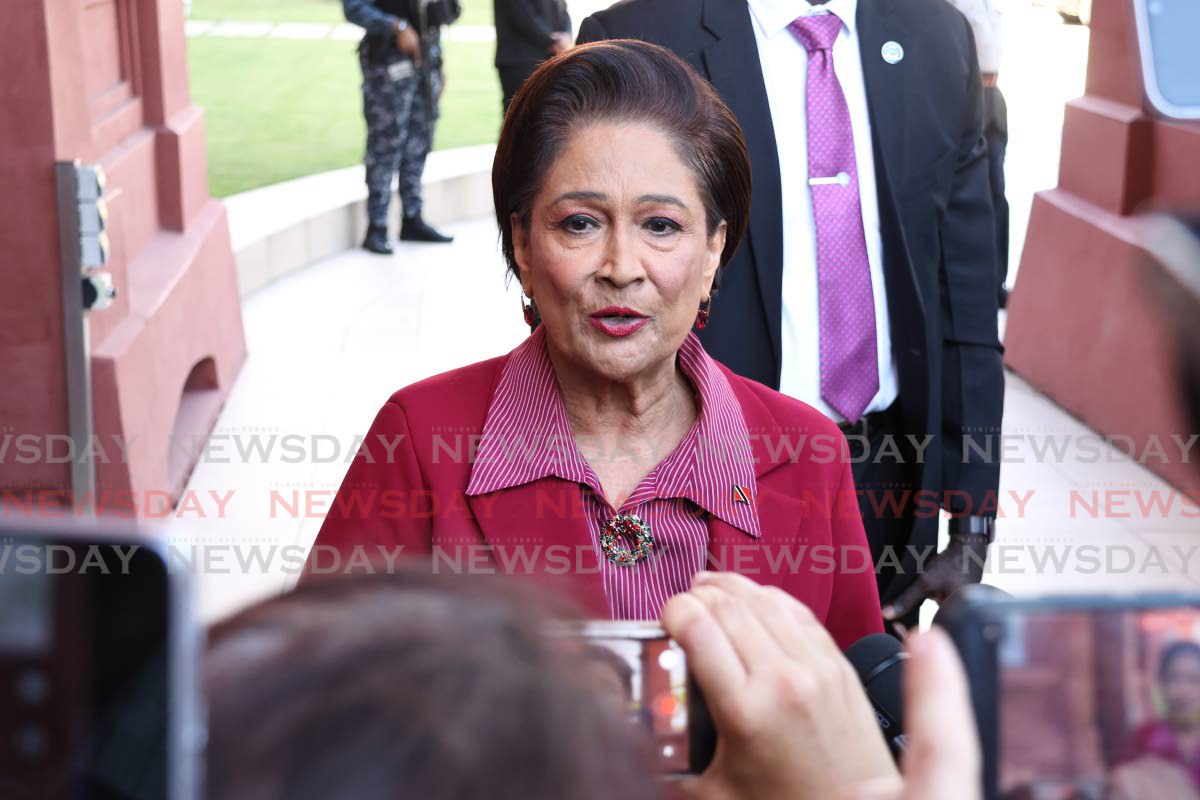
Prime Minister Kamla Persad-Bissessar has explicitly stated that Trinidad and Tobago maintains no involvement in the United States’ recently announced naval blockade targeting Venezuelan oil tankers. The Caribbean leader emphasized that her nation’s partnership with the US strictly focuses on domestic security concerns rather than international sanctions enforcement.
Speaking to journalists following a funeral service in Petit Valley on December 17, Persad-Bissessar clarified her government’s position: “TT is about TT first. Our partnership with the US is about TT safety and security here. Those are issues for the Trump administration and for the US. TT is no part of that blockade.”
The Prime Minister’s comments came shortly after President Donald Trump declared the blockade via social media platform X, citing Venezuela’s designation as a “foreign terrorist organization” due to alleged asset theft, terrorism, drug smuggling, and human trafficking activities.
Despite distancing herself from the Venezuela blockade, Persad-Bissessar expressed satisfaction with the US security partnership’s outcomes, noting a reduction of 240 murders compared to the previous year and recent drug seizures exceeding $200 million value. These successes, attributed to advanced radar technology deployed in Tobago, form the basis of the government’s continued cooperation with US anti-narcotics operations.
The Venezuelan government has vehemently condemned Trump’s blockade announcement, with Defense Minister Vladimir Padrino López dismissing the statements as “delusional” and accusing the US of attempting to control Venezuela’s natural resources. “It’s not about narcoterrorism,” López asserted. “It’s all about the oil.”
International support for Venezuela has emerged from multiple nations including Russia, China, Cuba, Colombia, and Iran. The Iranian government characterized the blockade as “state piracy and armed robbery at sea,” while Russia warned of potential unprecedented consequences for the Western Hemisphere.
Diplomatic efforts are underway to mitigate tensions, with Mexican President Claudia Sheinbaum urging UN intervention and offering Mexico as neutral ground for potential US-Venezuela negotiations. Brazilian President Luiz Inácio Lula da Silva similarly advocated for dialogue between the nations.
Venezuelan Vice President Delcy Rodríguez reinforced her country’s position via Telegram, emphasizing that Venezuela’s energy resources would never again be controlled by foreign powers: “We will never again be an energy colony of anyone or any foreign power that dreams of stealing our riches.”