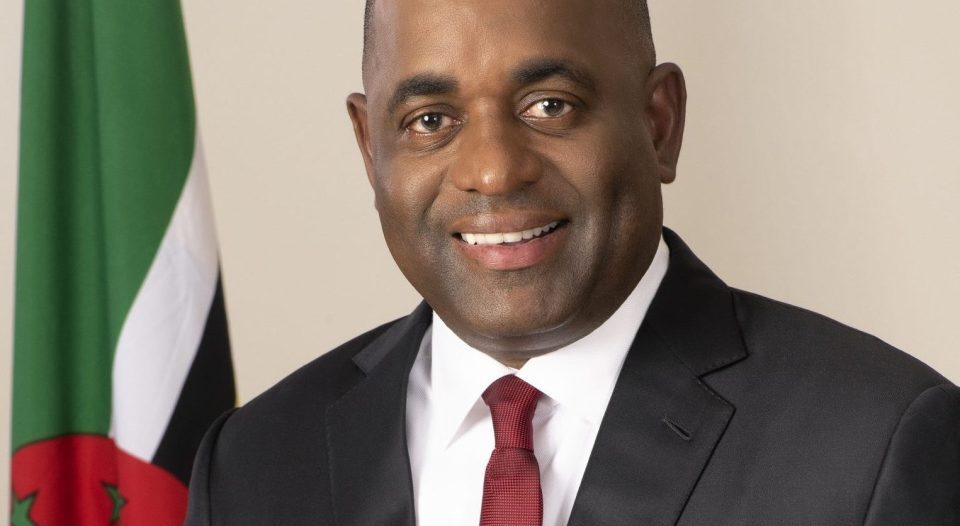
Prime Minister Roosevelt Skerrit of Dominica has expressed profound surprise regarding the United States’ recent decision to impose entry restrictions on Dominican citizens. The measure, enacted through a presidential proclamation signed on December 16, 2025, by President Donald Trump, cites national security concerns and weaknesses in foreign identity-management systems as justification.
During a live radio interview on DBS Radio, PM Skerrit clarified that while his government respects U.S. sovereignty, the rationale behind the decision appears contradictory. The U.S. government specifically cited Dominica’s Citizenship by Investment (CBI) program lacking a residency requirement as a primary concern. However, Skerrit revealed that Dominica had recently enacted comprehensive legislation on October 15, 2025, that explicitly establishes residency requirements—a framework developed with direct input and approval from various U.S. government departments, including the Treasury Department and the U.S. Embassy in Barbados.
The Prime Minister disclosed that immediate contacts with U.S. officials yielded further surprise, as Embassy and State Department contacts indicated they had no prior formal information about the restrictions and were themselves surprised by the White House’s action. Skerrit characterized this development as a potential miscommunication between different branches of the U.S. government.
Skerrit emphasized his administration’s commitment to resolving the matter through diplomatic channels, with formal communications being sent to seek clarification and urge reconsideration. He simultaneously urged calm among Dominican citizens, assuring them that his government would maintain transparency throughout the process.
The Prime Minister also highlighted the critical importance of the CBI program to Dominica’s economic resilience, noting its essential role in funding disaster recovery efforts following Tropical Storm Erika, Hurricane Maria, and the COVID-19 pandemic, as well as financing vital infrastructure projects including hospitals, schools, and roads. He contextualized Dominica’s program within global practices, noting that many developed nations maintain similar investment migration programs.
Skerrit concluded by expressing confidence that through continued dialogue, the situation could be resolved, emphasizing that if the stated reason is indeed the residency requirement, it has already been addressed with U.S. cooperation and approval.