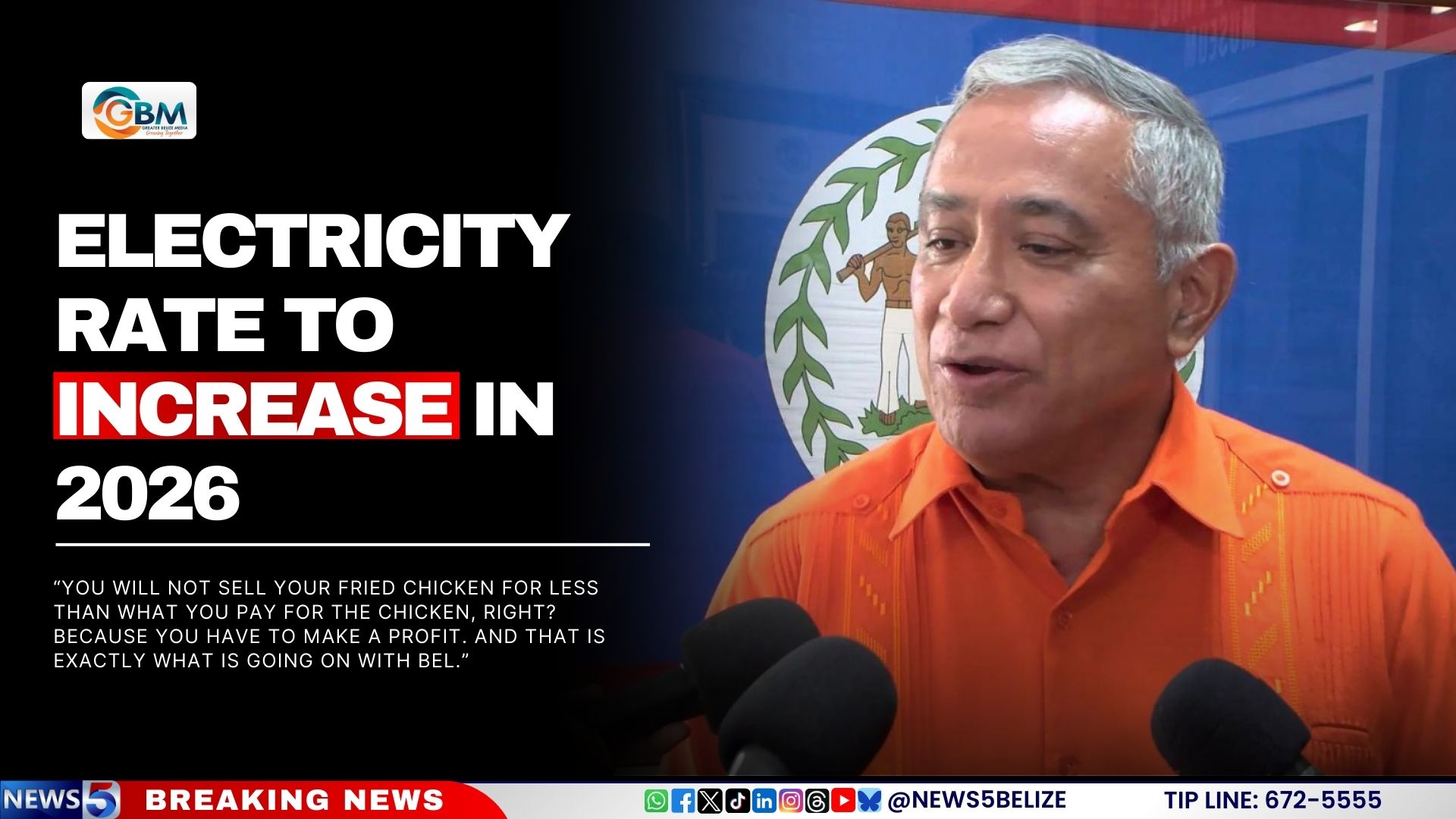
The Public Utilities Commission (PUC) of Belize has unveiled its preliminary ruling recommending an upward adjustment to electricity tariffs as part of modifications to the Belize Electricity Limited (BEL) Annual Review Proceeding for 2025. This development signals increased energy costs for consumers beginning next year.
In an official communiqué, the regulatory body confirmed it has finalized draft amendments compliant with the Electricity (Tariffs, Fees and Charges) Byelaws. While BEL sought approval for a $0.0555 per kilowatt-hour augmentation to the Mean Electricity Rate (MER), the Commission has counter-proposed a moderated increase of $0.0337 per kilowatt-hour. This adjusted rate would establish a new MER benchmark of $0.4427 per kilowatt-hour if formally ratified.
The PUC clarified that the proposed tariff revision aims to alleviate BEL’s financial constraints while enabling cost recovery for sustainable service provision. Regulatory authorities emphasized implementing consumer protection measures, particularly for socially vulnerable and residential customers beneath the GST threshold. The rate restructuring methodology will distribute increases strategically to mitigate household bill impacts.
Prime Minister John Briceño addressed the contentious issue during recent House of Representatives proceedings, justifying the necessity of utility rate elevations amid escalating operational expenditures and regional market dynamics. The Prime Minister highlighted that BEL has maintained rate stability since the current administration took office in 2020, despite confronting COVID-19 economic disruptions, inflationary pressures, and unprecedented heat waves that drove imported electricity costs to $1 per kilowatt-hour from Mexican suppliers during 2024’s supply crises.
Briceño detailed BEL’s collaborative efforts with major commercial consumers, particularly tourism establishments in San Pedro, to activate private generators during grid instability episodes. This cooperative approach involved compensatory arrangements for higher self-generation costs when imported electricity prices surpassed retail rates.
While acknowledging public apprehension regarding cost-of-living increases, the Prime Minister contextualized Belize’s electricity pricing as comparatively lower than regional Caribbean counterparts. He emphasized the unsustainability of BEL’s current practice of selling electricity beneath procurement costs, drawing analogies to commercial viability requirements in other sectors. The administration contends that after five years of rate suppression, this adjustment becomes inevitable to prevent eventual taxpayer-funded bailouts of the utility provider.