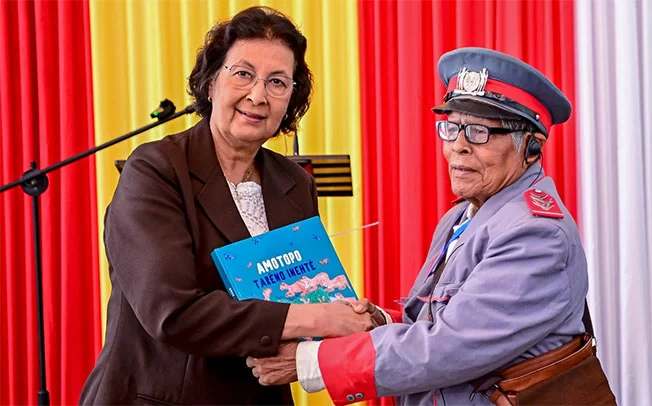
In a landmark ceremony at the National Assembly building, President Jennifer Simons formally received comprehensive development plans from villages in Suriname’s Coeroenie and Matawai regions. These documents represent a significant step in regional decentralization, outlining community-driven priorities across social, economic, and ecological dimensions.
The ceremony marked the culmination of an extensive eighteen-month participatory planning process conducted in collaboration with the Amazon Conservation Team (ACT), various government ministries, and non-governmental organizations. ACT Regional Director Minu Parahoe explained that methodologies were adapted from regional models to suit Suriname’s unique context, with villages establishing their development vision through traditional krutu consultations.
President Simons praised the initiative as demonstrating village communities’ readiness to assume greater responsibility within regional development and decentralization processes. ‘We’re building a model where district residents can determine their own development direction,’ Simons stated. ‘Indigenous and tribal peoples have long practiced local governance, but this must now be structurally integrated into the national governance system.’
The development plans also provide crucial input for ongoing land rights recognition efforts. Simons emphasized that collaboration with traditional authorities remains essential for achieving sustainable solutions, according to the Communication Service Suriname.
Current progress indicates completed plans for approximately ten villages in the Upper Saramacca region within the Matawai area, while downstream communities are still determining their participation. In Southern Suriname, eight of nine indigenous villages have expressed interest, with five already possessing finalized documents. ACT anticipates further participation from tribal communities in coastal regions.
These formally submitted plans now create expectation among communities that their priorities will be incorporated into the government’s national development policies, representing a transformative approach to inclusive governance in Suriname.