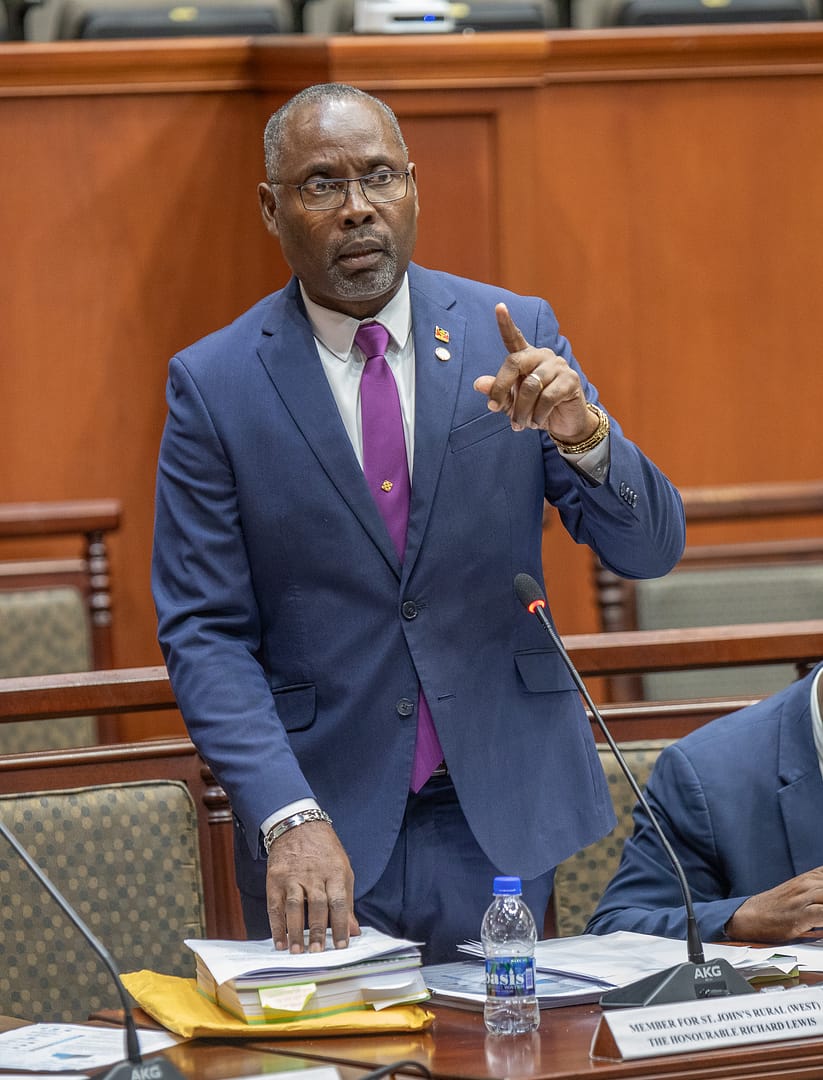
During Monday’s parliamentary budget session, Opposition Member of Parliament Richard Lewis launched a substantive critique against the government’s employment statistics, characterizing official job figures as fundamentally unverifiable and potentially misleading. The contentious exchange emerged as lawmakers debated the administration’s economic performance claims.
Lewis directly contested the Prime Minister’s declaration that national unemployment had dropped below the five percent threshold, asserting that without current labor-force survey data, any precise unemployment rate calculation remains speculative. The parliamentarian highlighted that the most recent comprehensive Labor Force Survey dates back to 2018, with its findings published in 2020, creating a significant informational gap in workforce assessment.
The opposition’s critique centered on methodological concerns regarding the government’s dependence on Social Security records to estimate employment levels. Lewis maintained that this approach potentially distorts economic realities and fails to capture the genuine employment landscape across Antigua and Barbuda.
Finance Ministry officials had presented budget documentation indicating active employment had risen from 43,000 positions in 2014 to approximately 54,000 in 2025—figures the administration characterized as representing near-full employment conditions. Lewis dismissed these conclusions as premature and statistically unsupported without current labor force measurements.
The Rural West representative framed his objections within broader concerns about economic reporting transparency, emphasizing that employment statistics must align with observable ground-level realities rather than theoretical projections derived from incomplete datasets. Lewis formally urged the administration to commission an updated labor-force survey to establish evidence-based policymaking foundations.