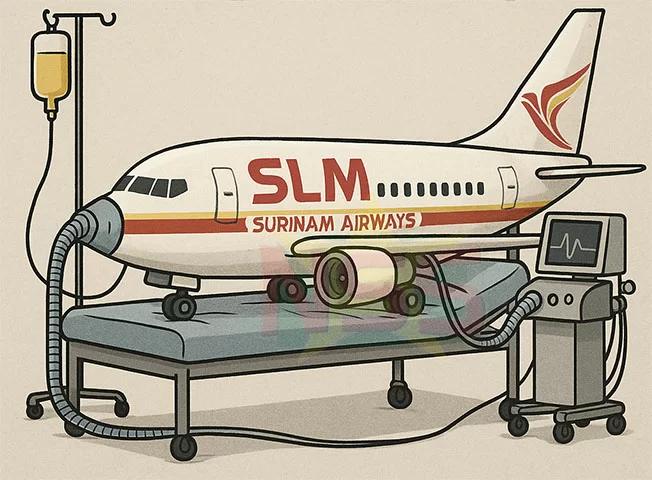
Surinam Airways (SLM) has reached a critical inflection point, with a recent diagnostic assessment revealing the national carrier’s condition to be far more dire than previously acknowledged by officials. The airline, which has been operating as an intensive care patient for years, now faces an existential crisis that demands immediate and decisive intervention.
The comprehensive review exposes decades of systemic failures including political indecision, financial mismanagement, and operational neglect that have brought the carrier to the brink of collapse. Despite employee dedication and national pride, the airline has operated with an aging fleet, excessive costs, and inefficient operations that rendered it more reminiscent of a aviation museum than a modern airline enterprise.
President Jennifer Simons now confronts the formidable task of making determinations that previous administrations consistently avoided. The assessment makes clear that superficial changes—board reshufflings or leadership musical chairs—will not address fundamental structural deficiencies. The aircraft’s corroded fuselage cannot be remedied by rearranging personnel.
The core challenges remain stark: without substantial funding, clear vision, strong political backing, and executable recovery strategy, no meaningful transformation can occur. The playing field itself requires renovation, not merely player substitutions. More than 500 employees deserve certainty about their future.
Suriname’s emotional attachment to maintaining a national carrier conflicts with economic realities. While SLM once symbolized national pride and global connectivity, sentiment cannot finance fuel costs, lease payments, maintenance, or millions in accumulated debt. Aviation operates on rigorous business principles, modern fleets, operational discipline, and financial sustainability—not nostalgia.
The president must now make painful choices regarding which components merit preservation, which require privatization, and where to draw the line between national pride and financially strangling prestige. The assessment, while not simplifying these decisions, makes them unavoidable.
The time for political poetry has passed. The nation requires clarity instead of delay, courage rather than sentiment, and a future where aviation connects rather than financially constricts the country.