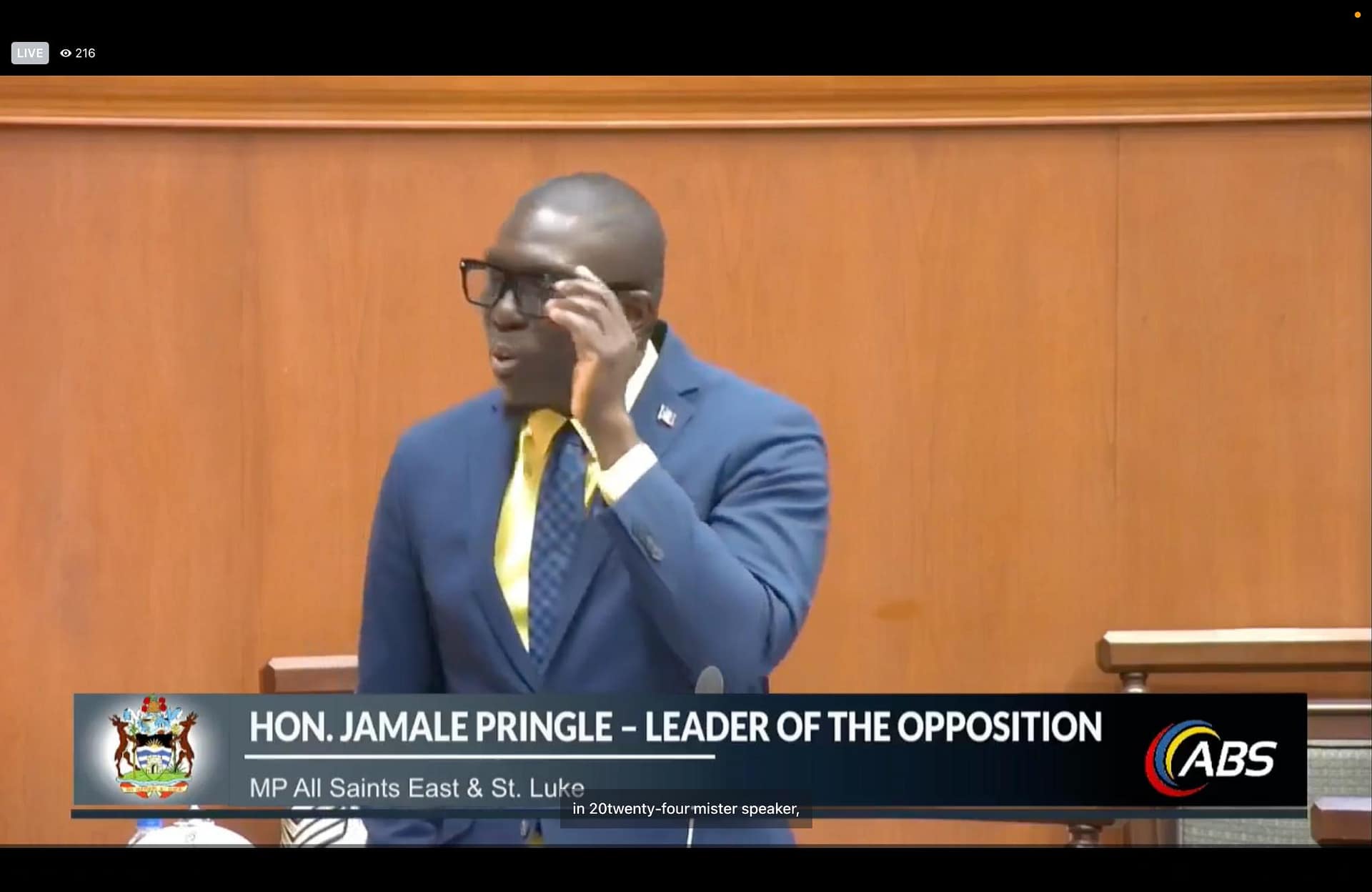
Opposition Leader Jamale Pringle has leveled serious allegations against Prime Minister Gaston Browne, accusing him of employing “double standards” in addressing ministerial misconduct within the administration. The accusations emerged during Monday’s parliamentary budget debate, where Pringle drew sharp contrasts between Browne’s historical handling of ministerial dismissals and his current approach to the ongoing vehicle-procurement controversy.
Pringle presented a detailed comparative analysis of previous ministerial terminations, highlighting three specific cases. He referenced the 2020 dismissal of former Education Minister Michael Browne, who was removed following police charges despite subsequent acquittal. The opposition leader also cited the termination of Dean Jonas, who was reportedly fired due to what the prime minister characterized as “toxic relationships” with staff members. Additionally, Pringle noted the 2018 removal of Asot Michael after British investigators questioned him, though no formal charges were ever filed.
These historical precedents stood in stark contrast to the current administration’s response to the vehicle-procurement allegations, according to Pringle. He asserted that the prime minister’s public statements indicate a marked reluctance to implement similar consequences when “the matter involves someone close to home.”
The opposition leader’s critique extends beyond individual cases to broader governance concerns. Pringle emphasized that the inconsistent application of accountability measures raises fundamental questions about governmental consistency and integrity. He maintained that the public cannot reasonably be expected to accept variable enforcement standards based on personal relationships within the administration.
Pringle’s allegations form part of a comprehensive criticism of the government’s procurement and oversight mechanisms. He has formally called for an independent investigation into the vehicle procurement matter, dismissing the prime minister’s proposed internal review as fundamentally inadequate to address the seriousness of the allegations.