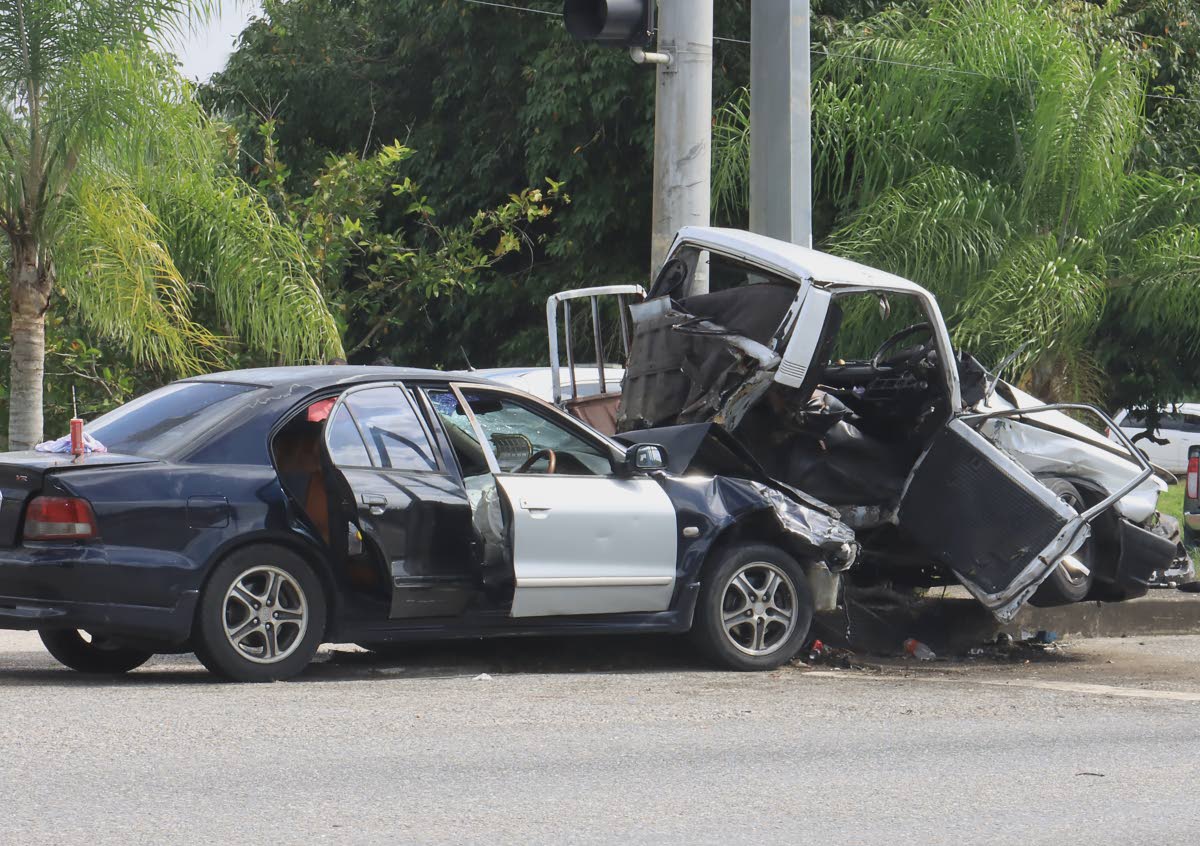
Trinidad and Tobago’s Finance Minister Davendranath Tancoo has announced the imminent operationalization of the long-awaited Motor Vehicle Accident Fund, with full infrastructure expected to be in place by the first quarter of 2026. The announcement comes amid heated political debate regarding recently passed financial legislation.
During a December 7 interview, Minister Tancoo emphasized that the Financial Bill provisions were designed specifically to protect citizens, countering opposition claims that the measures simply imposed additional taxes. “The People’s National Movement is attempting to create the impression that this is a tax on people,” Tancoo stated, “when in reality it establishes crucial protections for accident victims.”
The Minister explained that the current system leaves victims without recourse when involved in accidents with uninsured, unlicensed, or improperly documented drivers. The new framework establishes significantly increased penalties for traffic violations while simultaneously creating a safety net for those affected by such violations.
“We have implemented substantially higher penalties for driving without insurance, operating overloaded vehicles, driving without proper permits, and using fraudulent insurance documentation,” Tancoo detailed. “Concurrently, we’ve established an Accident Victims Fund to provide compensation for those injured by uninsured motorists.”
The fund’s history dates back to 2008, with significant development occurring during Prime Minister Kamla Persad-Bissessar’s first administration between 2010-2015. Cabinet approval for the fund was granted in 2015 with an initial $20 million allocation. The project faced delays due to legal challenges from the Motor Insurance Bureau Association, and as recently as last year, advocacy group Arrive Alive had questioned the ministry about the fund’s status, which was reported to contain approximately $1 billion.
Tancoo directly addressed political opposition to the measures, asserting that only lawbreakers had reason to fear the increased penalties. “The PNM voted against these protections and apparently believe there should not be increased penalties for those who break the law,” he stated. “As far as I’m concerned, the PNM is encouraging violation of the law. They have never supported government anti-crime measures.”
The Minister emphasized that the dual approach of increased penalties and victim compensation was designed to both deter unlawful behavior and provide protection for law-abiding citizens. “We are trying to encourage compliance with traffic laws while ensuring that victims have recourse when others choose to break those laws,” he concluded.
The Financial Bill containing these provisions passed on December 5, 2024, during the 2025/2026 budget presentation, which also announced increased fines for dangerous driving, driving under influence, and driving while disqualified.