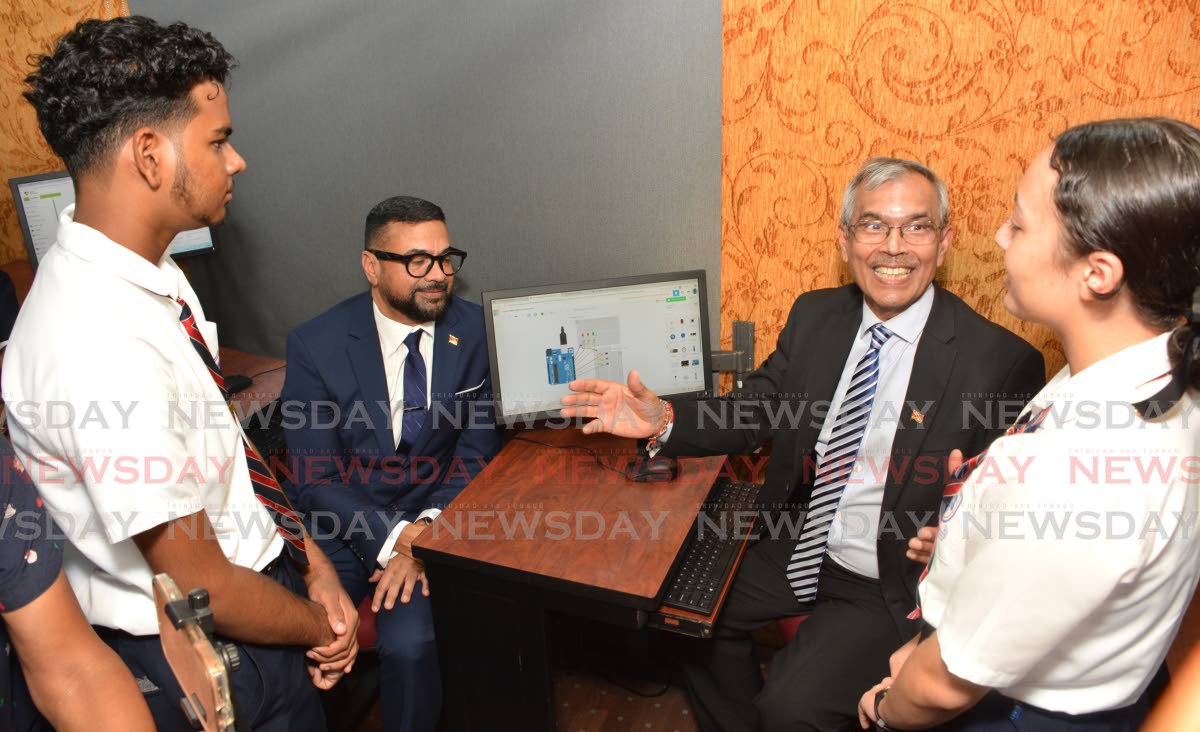
In a significant stride toward digital inclusion, Trinidad and Tobago’s Ministry of Tertiary Education and Skills Training has unveiled a refurbished Mobile Computer Training Unit—dubbed the ICT Bus—to deliver technology education directly to underserved communities. The initiative, launched December 5 at Marabella North Secondary School, represents a national commitment to equitable skills development in an increasingly digital economy.
Minister Prof Prakash Persad, the keynote speaker, highlighted a crucial paradox in global technological advancement: while artificial intelligence dominates headlines and investments, the actual surge in demand is for skilled tradespeople who build and maintain digital infrastructure. “Without the technicians who put up the buildings and maintain the computers, there could be no AI,” Persad stated. “New skills must not replace the old ones; they must coexist.”
He emphasized that despite massive global investments in data centers—exceeding US$50 billion in the United States alone—the pressing need remains for plumbers, electricians, and carpenters. Persad urged citizens to value all forms of honest work, reminding youth that every profession contributing to digital infrastructure is “honorable and essential.”
The ICT Bus, operated by the Youth Training and Employment Partnership Programme (YTEPP), symbolizes mobility, inclusion, and national readiness. Equipped with computers, internet access, and learning software, it will offer digital literacy, mobile app development, web design, AI workflow training, CAD, and graphic design to diverse beneficiaries including youth, adults seeking retraining, and community organizations.
YTEPP Chairman Dr. Maurice Jones described the vehicle as “more than the unveiling of a vehicle; it is hope, opportunity, and proof that no citizen should be left behind.” He committed that the bus would actively travel to communities where digital training needs are most urgent.
Claxton Bay MP Hansen Narinesingh, who recently attended a Commonwealth parliamentary conference on responsible AI in Malaysia, emphasized the economic imperative of workforce recalibration. “The recalibration of our national workforce is not optional; it is an economic imperative,” he stated, urging students to maximize the program’s benefits.
The launch event featured guided tours of the mobile unit where students will develop skills prioritized by modern labor markets: adaptability, analytical acuity, and digital fluency. Across all addresses, a unified message emerged: as Trinidad and Tobago advances toward a knowledge-driven future, no community or learner should be excluded from the digital transformation.