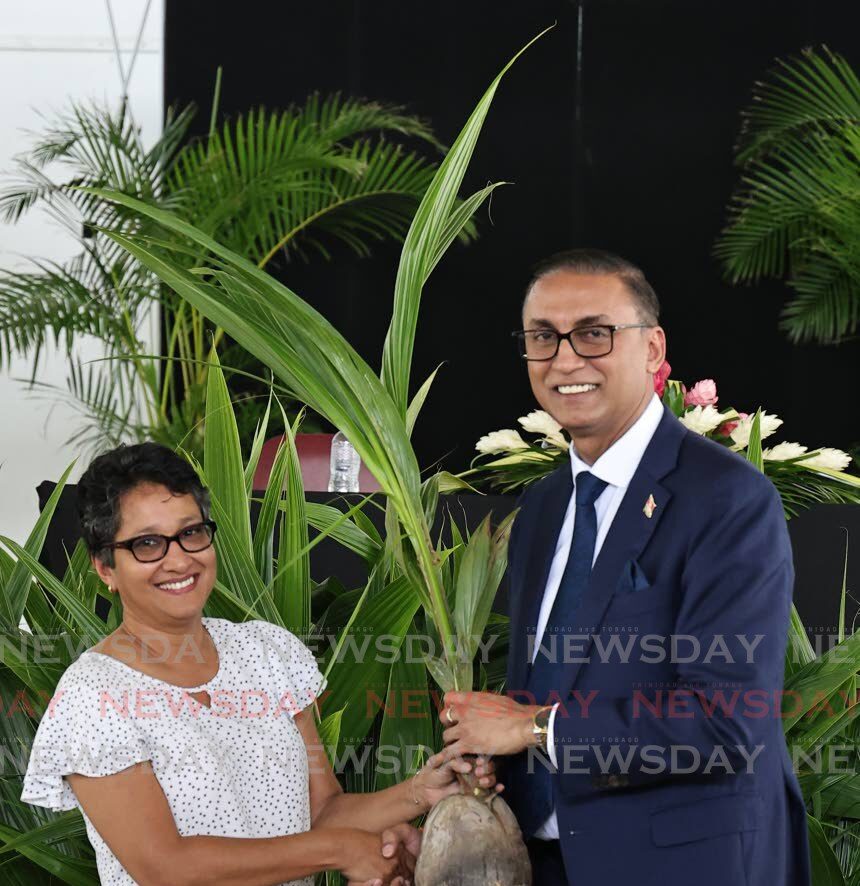
The Trinidad and Tobago Ministry of Agriculture and Fisheries has initiated a comprehensive strategy to resurrect the nation’s declining coconut sector, targeting US$1 billion in agricultural exports. Minister Ravi Ratiram unveiled the ambitious plan during a ceremonial distribution of Brazilian dwarf coconut seedlings at the Central Experiment Station in Centeno on December 1.
Minister Ratiram revealed alarming statistics showing agriculture’s contribution to GDP has plummeted by $1.4 billion to just $650 million over the past decade, representing a more than 50% deterioration. The ministry’s intervention focuses on developing a complete coconut value chain rather than simply increasing raw nut production. This integrated approach encompasses farming, processing, manufacturing, distribution, and export operations.
The Brazilian green dwarf coconut variety was specifically selected for its superior genetics, pest resistance, and exceptional water-producing capacity of over 600ml per nut. Each participating farmer received ten seedlings as part of the initial phase, with over 150 growers already expressing interest in the revitalization program.
The Caribbean Agricultural Research and Development Institute (CARDI) plays a crucial role in this initiative, providing expertise in genetic improvement, pest management, and technical training. Executive Director Ansari Hosein outlined parallel efforts including establishing seed gardens across nine EU countries, with projected annual production of 45,000 nuts within two years.
Global market projections indicate substantial opportunity, with the coconut water market expected to surpass US$11 billion by 2060 and the overall coconut market anticipated to exceed US$58 billion by 2030. The ministry recognizes challenges including aging tree populations, lethal yellowing disease, South American palm weevils, and decades of underinvestment.
Chief Technical Officer Ian Mohammed emphasized that the seedling distribution symbolizes both literal and figurative investment in transforming agriculture into a driver of food security, rural development, and economic diversification. The program represents a strategic partnership between government, research institutions, and farmers to restore Trinidad and Tobago’s position in the global coconut market.